Sand & Refinish vs Recoat vs Replace: Which Does Your Auckland Floor Need?
A clear guide to the three options for a tired timber floor — what each costs, how long it takes, and how to tell which one your floor needs.
Which option does your floor need?
Answer five quick questions for an instant recommendation.
Call 09 888 0793 for a Free Assessment
How this tool works: the recommendation is based on the problem you describe, the condition and thickness of the timber, and what matters most to you. Damaged or very thin boards point toward replacement; scratches, greying or stains point toward a full sand and refinish; a dull but sound finish points toward a recoat. It is a guide to help you plan, not a substitute for an on-site inspection.
At-a-glance comparison
| Buff & Recoat | Sand & Refinish | Replace | |
|---|---|---|---|
| Best for | Dull or lightly worn finish, timber sound | Scratches, greying, stains, worn-through coating | Rotten, cupped or damaged boards |
| What’s involved | Light buff + 1 fresh coat | Full sand to bare timber + 2–3 coats | Rip out + supply & lay new floor |
| Typical Auckland cost | $35–$55/m² | $65–$85/m² | $150–$400/m² all-up |
| Time | ~1 day | 2–4 days | 1–2+ weeks |
| Keeps your timber? | Yes | Yes | No |
| Lifespan added | 2–3 years | 7–10 years | New floor |
| Disruption | Low | Medium | High |
| Common Auckland scenarios | Rental turnovers, a tidy-up before selling | Heritage villas, scratched living areas, sun-faded boards | Water-damaged or borer-affected floors |
Real Auckland results
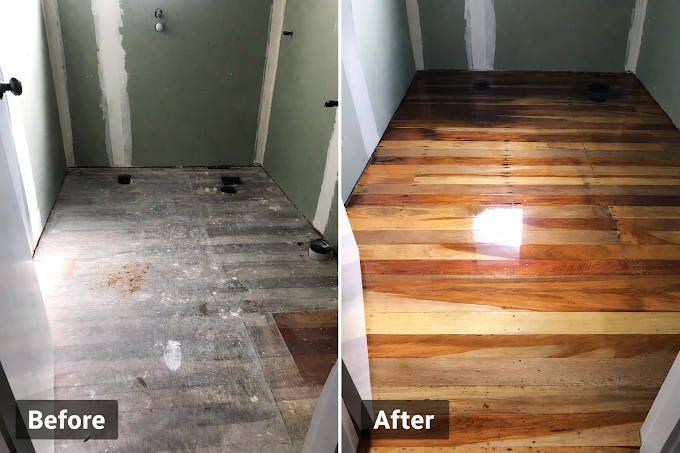
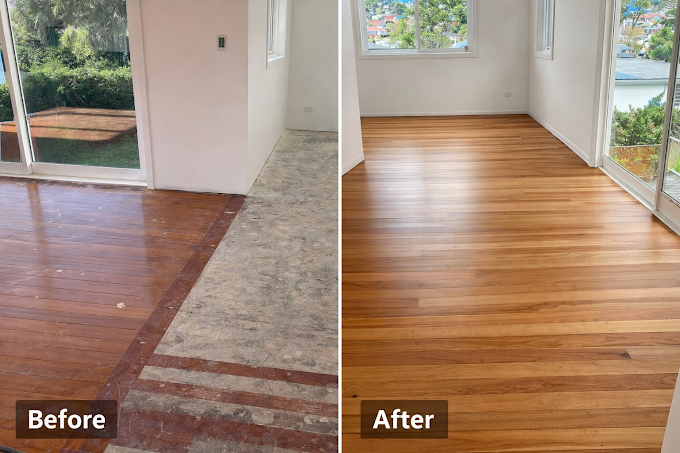
Option 1 — Buff & Recoat
Buffing and recoating (a maintenance coat) is the lightest, cheapest option. The existing finish is lightly abraded and a fresh protective coat applied over the top — no sanding back to bare timber.
Best for
- Floors that look dull or have lost their shine
- Light scuffs with the coating still intact
- Protecting a good floor before wear reaches the timber
Advantages
- Cheapest option (around $35–$55/m²)
- Fast — usually done in a day
- Low disruption and low dust
- Extends the life of your existing finish
Limits
- Won’t remove scratches, stains or grey patches
- Not possible once the coating has worn to bare timber
- Adds 2–3 years, not a full refresh
When to choose it
When the floor is sound and you just want to refresh and protect the finish before it wears down to the timber.
Option 2 — Sand & Refinish
Sanding and refinishing takes the floor back to bare timber, removing scratches, stains, greying and old coatings, then rebuilds the surface with 2–3 fresh coats. This is the right option for most tired timber floors.
Best for
- Visible scratches, dents or stains
- Grey, weathered or patchy timber
- Coating that’s peeling or worn through
- Floors you want looking like new again
Advantages
- Restores the floor to near-new condition
- Removes most scratches, stains and wear
- Lets you change colour or sheen (matt, satin, gloss; stain or natural)
- A quality finish lasts 7–10 years
- Far cheaper than replacement — keeps your original timber
Limits
- Takes 2–4 days
- Some dust (modern extraction captures ~95%)
- Needs enough board thickness left to sand
When to choose it
When the timber is sound but the surface is worn, scratched or dated. For most Auckland villas and homes, this delivers the biggest transformation for the money. See our wood floor refinishing and timber floor restoration pages.
Option 3 — Replace
Replacement means removing the old floor and laying a new one. It’s the most expensive and disruptive option, and only necessary when the existing timber can’t be saved.
Best for
- Rotten, water-damaged or borer-affected boards
- Severe cupping, warping or structural movement
- Floors already sanded to the limit (boards too thin)
- Switching to a different floor type entirely
Advantages
- A brand-new floor with full lifespan
- Chance to change timber, colour or layout
- Fixes problems no refinish can
Limits
- Most expensive (typically $150–$400/m² all-up)
- Longest job — often 1–2+ weeks
- High disruption; the old floor is lost
When to choose it
When the boards are genuinely beyond saving. A good specialist will always check whether refinishing is still possible first. See our wood floor installation page.
How to tell which your floor needs
- Finish looks dull, no scratches? → Recoat
- Scratches, grey patches or stains? → Sand & refinish
- Bare timber showing through? → Sand & refinish
- Gaps to close, or a colour change? → Sand & refinish (with gap filling / stain)
- Boards rotten, springy or badly cupped? → Likely replacement
- Sanded many times, boards feel thin? → Possibly replacement
Cost comparison (Auckland)
| Option | Typical Auckland cost | Why it costs what it does |
|---|---|---|
| Buff & recoat | $35–$55/m² | No sanding; one coat; fast, low labour |
| Sand & refinish | $65–$85/m² | Full sanding + 2–3 coats; more labour and materials |
| Replace (supply & lay) | $150–$400/m² all-up | New timber + removal + installation + finishing |
Prices vary with floor size, timber type, condition and finish. Larger areas usually cost less per m². All figures are indicative — get a free quote for your exact floor.
Frequently asked questions
Is it cheaper to refinish or replace timber floors?
Refinishing is far cheaper — usually a fraction of replacement cost — because it reuses your existing timber. A solid timber floor can be sanded and refinished 5–10 times over its life, so replacement is rarely needed.
How do I know if I need a recoat or a full sand?
If the coating is intact and the floor is just dull, a recoat is enough. If there are scratches, stains or bare timber showing, you need a full sand and refinish.
Can every timber floor be refinished instead of replaced?
Most can. Solid timber can be sanded many times. Replacement is only needed when boards are rotten, structurally damaged or too thin to sand.
How long does each option take?
A recoat is usually one day, a full sand and refinish 2–4 days, and a replacement 1–2 weeks or more.
Which option lasts longest?
A full sand and refinish lasts 7–10 years; a recoat adds 2–3 years; a new floor starts the lifespan over.
Get a free, no-obligation on-site assessment. We’ll tell you honestly whether a recoat, refinish or replacement is the right call — and quote your exact floor.
