Timber Staircase Sanding and Polishing
What's Covered on This Page
- How to Tell if Your Timber Staircase Needs Sanding & Polishing?
- What Is the Finish for Stair Treads?
- What Can I Do to Help Prepare My Staircase for Sanding?
- The Sanding and Polishing Process Step by Step
- Checking the Finished Product and Polished Timber Stairs Maintenance
- How do I know if my timber staircase actually needs sanding and polishing?
- What is the best finish for timber stair treads in an Auckland home?
- How long does timber staircase sanding and polishing take to complete?
- What should I do to prepare before the sanding team arrives?
- Do you sand and polish just the treads, or the risers and stringers too?
- Is it safe to sand and polish old native timber staircases in Auckland villas?
Need timber staircase sanding and polishing?
Call now for a free estimate. Call Floor Sanding Auckland Experts now.
How to Tell if Your Timber Staircase Needs Sanding & Polishing?
Your staircase probably goes overlooked by you and your family as you trample down it or up it every day. However, one day you suddenly get a closer glimpse of it or catch it under different light, then you wonder, "When did it come to this?" We hear stories like that twice a week from Auckland homeowners.
Here are the telltale signs we look for in a staircase when we do an inspection:
- Worn-through poly or oil finishes on the nosings. As you can imagine, the leading edge of your stair treads take the brunt of the abuse as the main traffic path on your st
aircase. As the protective layer wears off, the timber underneath gets exposed quickly. - Discolouring, or greyish patches. This happens especially often with the older native timber in the many Ponsonby villas in the Auckland City. The timber absorbs dirt & moisture as it is exposed, giving the timber a grey look.
- Scratches and scuff marks. Kids, pets, shoes, moving furniture. Scratches make your staircase look drab as the dirt and debris gets stuck in it.
- Patchy finish or surface becomes sticky. Old finish eventually gets degraded, and can start getting sticky to touch. It will be easy for you to notice as your feet tend to stick on treads if there are patches of varnish coming off.
- Small timber splinters. Another danger sign! Once the protective layer is lost, the timber gets dry & small splinters come off.
Can't really tell if what you're seeing is normal? That is very common because the majority of Auckland homes have native timber stairs in Rimu or Matai wood that are anywhere between 40 years to 50 and even up to 80 years old. They have a way to mask signs of damage and wear for a long time, then all of a sudden it is out in the open.
What we always tell our customers, run your hand along your stair treads. If you sense rough, gritty patches rather than smooth, it means there is damage to the finish, even if the stair doesn't look visibly worse for wear. Your hand can tell the real story when your eyes get fooled.
Don't just look at the stair treads, look up and down your risers and your stringers too. You'd be surprised how many cases we do where homeowners didn't think anything was wrong with the stairs, but then as we're sanding away the old finish we uncover cracking on the risers and discolouring on the stringers. We do this because even if you didn't notice it, you're going to see a mismatch when one part gets sanded and polished and another part doesn't get it.
It is always better to find this early to save time and money. If it is surface-level damage it will just take the regular sand and back. If you leave it for too long then you're going to be dealing with deep grain damage which will mean we have to do extra heavy sanding to remove the damaged timber and also more coats for good measure.
What Is the Finish for Stair Treads?
Stair treads are the most heavily travelled surface on your floor than anything else. Foot traffic means grit gets ground into the finish, so your finish needs to be right, especially on your stair treads.
We discuss this with Auckland homeowners every week without fail. Many people seem to think there is a finish, there are no finishes. It is critical that you get it right because the wrong choice could see you having to do all this again in a few years time, and the right choice has your stair treads looking great for many years with very little maintenance needed.
This is what we discuss with our customers:
- Water-based polyurethane. For staircases, this is the one we recommend most. It dries quickly, doesn't yellow, and produces a hard coating that can stand up to a lot of foot traffic. This works well for Rimu and native timbers if you're after a true-to-life finish.
- Hardwax oil. More natural in look and feel, because it soaks into the wood rather than sitting on top. Really nice on Kauri treads in an old Ponsonby villa. However, because it wears quickly in a staircase environment, you'll need to do more frequent touch-up coats.
- Clear polyurethane (solvent-based). Stronger in a lot of respects than water-based polyurethane, and will tend to amber a little. Some people like this warmer effect on darker timbers such as Matai.
Okay, now the obvious question: how do you decide? I'd say the following factors: how much traffic the stairs will experience; what sort of timber species you have; and how you want your finished treads to appear.
You're going to need different protection if there are kids going up and down all day in a Grey Lynn family home compared to a retired couple's place in Remuera. We cater to both of these, and can tell you what will work well in each. Most of the time, water-based polyurethane is the safest option for Auckland properties, given the conditions here.
Something people often don't think about is that the stairs nosings will be the parts to suffer the most wear. Whatever you choose, it has got to cope at the front edges, or otherwise the whole set of treads will look patchy after just a few months. The nosings are the ones we really pay attention to during sanding and polishing because that's where the finish really has to perform.
Need some advice as to what will be for your staircase? Just give us a call, and we can look at your timber and offer you an honest assessment immediately.
What Can I Do to Help Prepare My Staircase for Sanding?
Some prep beforehand is always going to go a long way. That way, the sanding team can work efficiently from the time they get in your front door.

First, clear the staircase. Take off any runners or stair tread pads. Take the stairs clear and take any photos or mirrors off the wall in the stairwell: the sanding equipment will be pretty vigorous, and the vibration will loosen things. We once had a framed photo come off the wall of a villa in Ponsonby as we were working. Definitely not the scenario.
Make use of this quick pre-sanding checklist in the week we're due in:
- Take all objects, shoes, or other clutter from the staircase and landing areas
- Remove all wall hanging, light shades, or other breakables from the stairwell
- Vacuum or sweep your stairs so we can assess the timber in a proper fashion
- Make sure that pets are not allowed access to the staircase while we're at it
It's an unfortunate fact of staircase sanding that some dust does get made. We'll use a dust extraction system of some description, so there is some amount of dust that's inevitably going to spread to other parts of the house. Be sure to cover the top and bottom doorways to other areas with dust-proof sheets or drop sheets to stop dust travelling from the sanding work area to the rest of the house.
Turn off any heat pump close by to prevent it from sucking in dust through the filters. The children and animals should be kept away from the site to keep the room dust-free and allow the coating to fully cure, as the stairs need to remain clear until it’s safe for you to walk upon them again, although you can make use of an alternate path from the front or back entrance.
Please don't try to clear up any residual glue or paint from the steps; that's what we're here for! Attempting to cut away at the glue with a knife can cause damage to the timber, making our job more difficult and resulting in an inferior finish.
Please do let us know of any squeaky or loose floorboards that need to be replaced or repaired prior to the job starting; this will help us determine how much time to allocate. It takes very little time to send a phone call or text and take a photo to share with us in advance.
Need help with timber staircase sanding and polishing?
Call now for a free estimate. Floor Sanding Auckland Experts is ready to help.
The Sanding and Polishing Process Step by Step
Our customers often ask us how we actually do things! And this makes sense; after all, this is the heart of your home. So, here is the step-by-step breakdown of how we do it:
- Inspection and preparation. We check for loose boards, old nails, and damage before any of the work begins. Any cracks or chips are then filled. Walls are taped and old tacking strips removed, especially if carpet has been laid down. If your Auckland villa is near Ponsonby, we often find layers of paint to remove, with beautiful Rimu below.
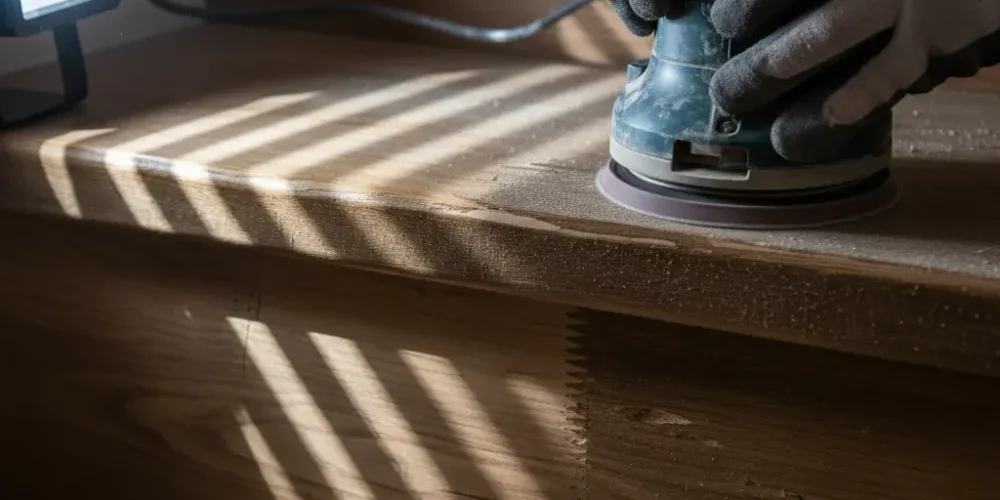
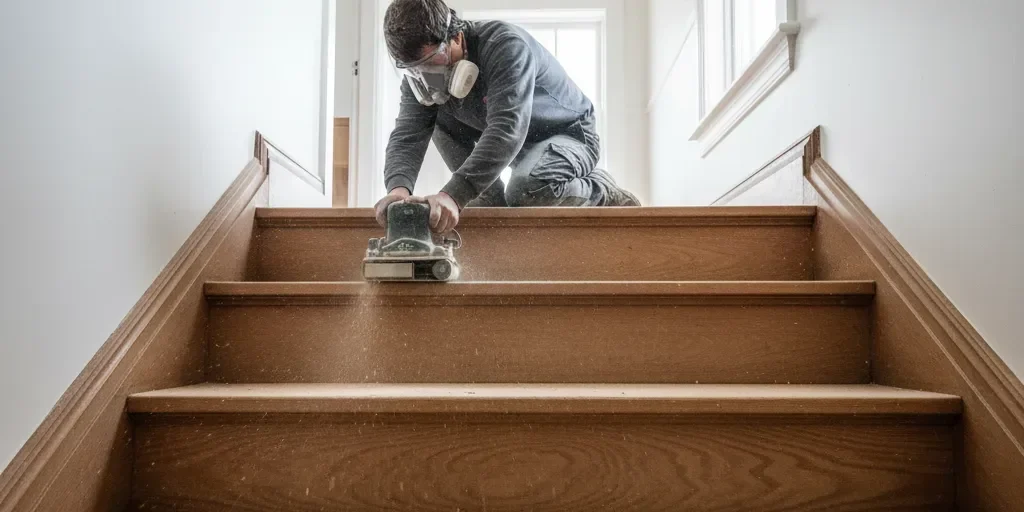
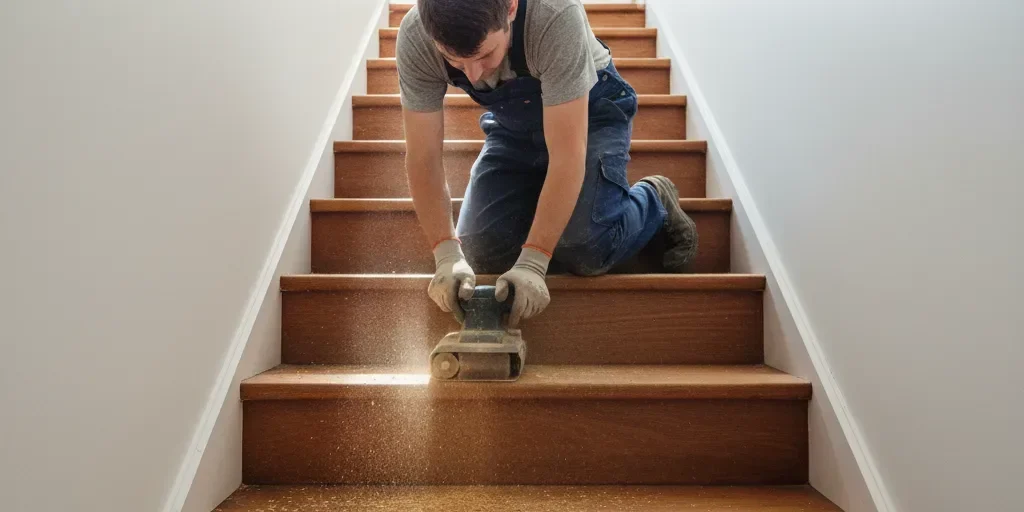
- Coarse sanding. Using our heavy-grade machines, we start by removing the old finish. As stairs are not flat, uninterrupted surfaces, we can't use our big drum sanders across them. We use a mixture of belt sanders and edge sanders, as well as sanding by hand. Spindles and the bases of balusters need hand sanding for results.
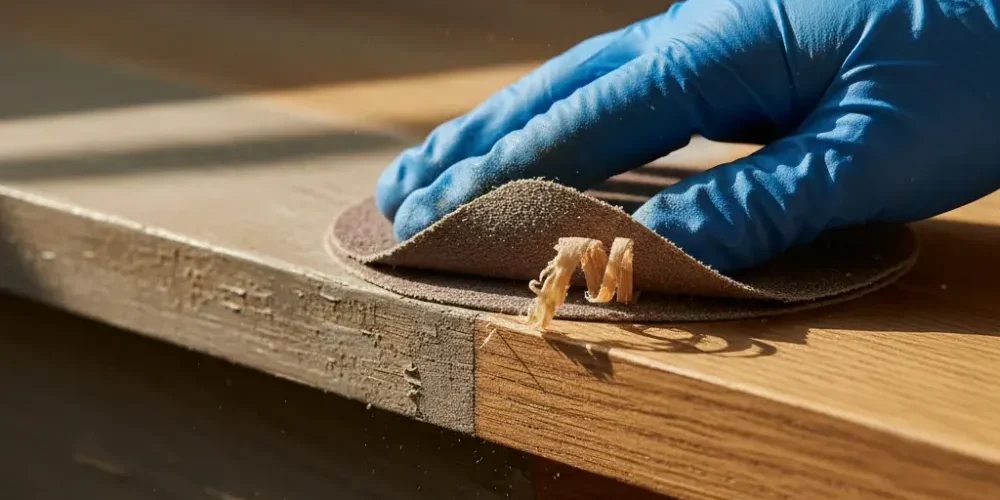
- Progressive sanding. We work through finer grits, usually three passes. Each one removes the scratch marks left by the last. Rushing this process is the biggest issue we come across with sanding attempts.
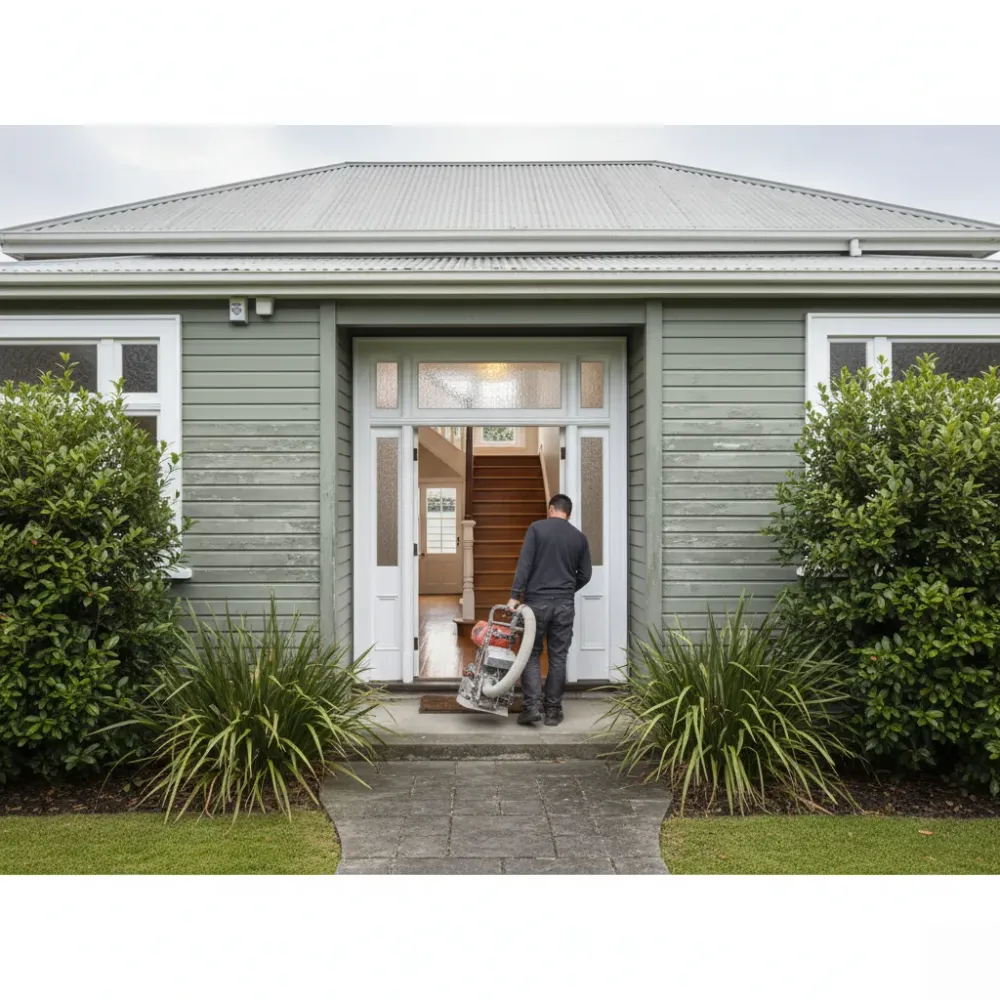
- Dust extraction and wipe down. We use our machines with their inbuilt dust extraction systems, and even then, we still thoroughly vacuum and dust the area with a tack cloth to make sure dust is removed before we proceed with your chosen finish, as dust is the enemy of a beautiful coating. A dust speck left under will show up as part of the finish.
- Finish. We then apply the finish you have chosen; Water Based Polyurethane is the most popular, as it cures quickly and doesn't yellow over time, something Auckland homeowners value highly. Others choose to apply a hardwax oil for a more natural and subtle feel. We coat it evenly, thinly, and sand lightly between each layer.
- Final Inspection. We give the floor a close look to that there are no runs, missed areas, or rough patches we need to correct before our work is complete.
Overall, expect the process to take around two to three days depending on the size of your staircase, and the number of coats you require. We’ve done this type of project hundreds of times around Auckland, and the process is the same as it has always been because it just works! Also, people don’t always realise that handrail is just as important as the treads. We will also sand and finish handrail because it does no one any good if you have perfectly polished steps but rough handrails on them.
Checking the Finished Product and Polished Timber Stairs Maintenance
Once we have completed the final coat, you'll come back and we'll look together over the entire staircase.

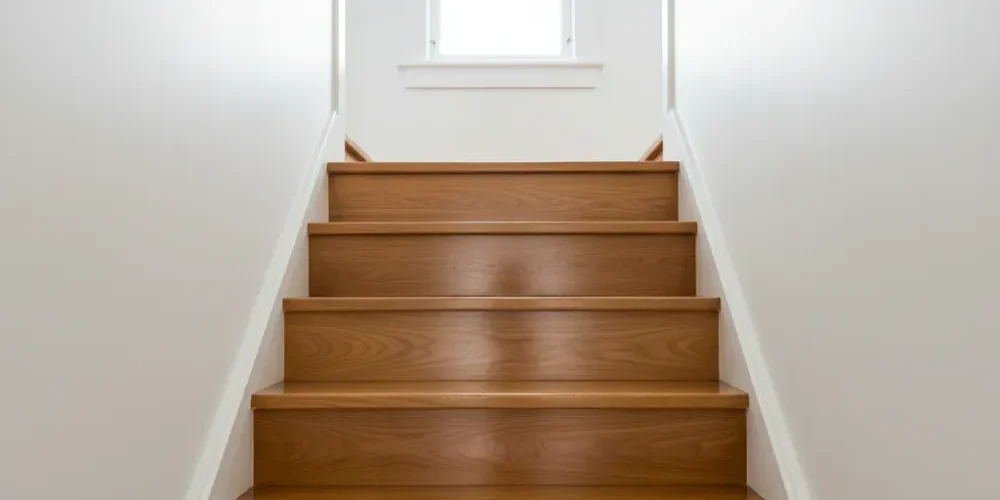
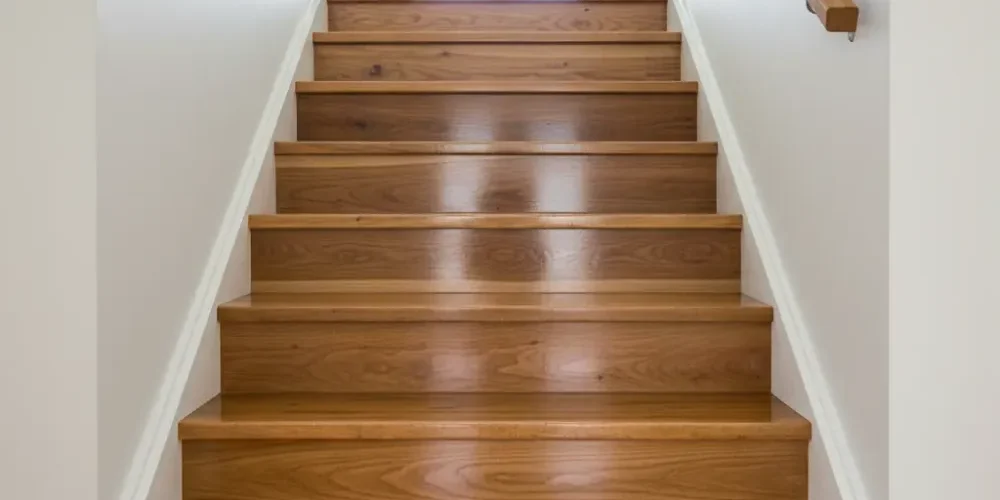
We'll have a look at every step with good lighting and run a hand over each tread. A quality finish should not have any patchy, uneven areas or visible sander marks. Often, this won't be noticeable unless we are close to the floor and view the staircase from a low angle. Nine times out of ten, our finish is great after our first pass but if we spot any problem areas then we'll fix it before we pack up and leave. That's just how we do things in Auckland.
What to look for yourself
So, what are some basic things to look for yourself? You don't need to be an expert in floor sanding to check for imperfections.
- Run your fingers over the nosing of every step. It should be smooth.
- Check the finish in natural light. Uneven sheen is a red flag.
- Look at the inside edge of the stairs where the treads and risers meet. You want to check for any finish build up.
- Walk the staircase wearing socks. If there's any rough grain, you'll be able to feel it immediately.
If anything is not correct within the first week, call us. It's often easier to make a simple touch-up call than a big rework call down the track.
Maintenance
Timber stairs take a beating. It has to take the weight of every person who walks down them every day, and it has to endure the pets, the toys and the kids. However, regular maintenance can help your stairs keep their natural beauty for a long time. You want to regularly remove dust or small stones by sweeping or vacuuming the stairs weekly. Dust and grit is a big no-no because it works like sandpaper under feet and wears away the finish at the quickest rate.
When something gets spilled on the stairs, you want to clean the surface up with a damp cloth, not a wet one. Polyurethane finishes, and older Rimu or Matai timber (common in older homes in neighbourhoods such as Grey Lynn and Ponsonby), don't go together well with standing water. You also don't want to use chemical cleaners like you find in the supermarkets. Most of these leave a residue on the staircase that can dull the finish over a period of time. You're off using a pH neutral timber cleaner.
Felt pads are also recommended if you have anything (like furniture, pets or other surfaces) that come into contact with your stairs. It's one of the quickest ways for damage to occur; think scratches and scuffs from furniture legs or hard sole shoes. We recommend putting a doormat right at the base of the stairs. Most of the grit you want to avoid can be caught with a mat.
upkeep, most homes in Auckland should expect to have their stairs buffed and recoated every three to five years (depending on the amount of foot traffic the stairs receive on a regular basis). This doesn't involve removing the floor completely and starting from scratch. Instead, it involves lightly sanding and recoating the stairs. It gives your polished timber stairs new protection and keeps them looking beautiful for years to come.
Frequently Asked Questions
Common questions about timber staircase sanding and polishing services
How do I know if my timber staircase actually needs sanding and polishing?
Run your hand along your stair treads — if you feel rough or gritty patches, the finish is damaged even if it looks okay to your eyes. Other signs include worn nosings, grey discolouring, sticky patches, and small splinters coming off the timber. Auckland homes with native Rimu or Matai stairs aged 40 to 80 years can mask wear for a long time. By the time it looks bad, the damage is often already deep.
What is the best finish for timber stair treads in an Auckland home?
Water-based polyurethane is what we recommend most for Auckland staircases. It dries quickly, stays clear without yellowing, and holds up well under heavy foot traffic. Auckland's humidity means you need a finish that won't lift or go patchy over time. Hardwax oil looks beautiful but needs more frequent touch-ups on stairs. Solvent-based polyurethane is another solid option if you want a slightly warmer amber tone on darker timbers like Matai.
How long does timber staircase sanding and polishing take to complete?
Most Auckland staircases take one to two days to sand and polish, depending on the size and condition of the timber. Older native timber stairs in places like Grey Lynn or Ponsonby sometimes need extra sanding passes if there is deep grain damage or heavy discolouring. Drying time between coats adds to the overall timeline. We always walk you through the schedule before we start so you know exactly when your stairs will be ready to use again.
What should I do to prepare before the sanding team arrives?
Clear everything off the staircase before we arrive. Remove any carpet runners, stair pads, and anything hanging on the walls of the stairwell. The sanding equipment creates vibration that can loosen frames and mirrors. Keep pets and children away from the work area for the day. The more clear and accessible the staircase is when we arrive, the faster and cleaner the job goes for everyone.
Do you sand and polish just the treads, or the risers and stringers too?
We always sand and polish the risers and stringers as well as the treads. If only the treads get done, you will end up with a mismatched finish that looks worse than before. During sanding, we often uncover cracking on risers and discolouring on stringers that homeowners had no idea was there. Doing the full staircase in one go saves you time and money and gives you a consistent, clean result across every part of the stairs.
Is it safe to sand and polish old native timber staircases in Auckland villas?
Yes, and it is actually one of the most common jobs we do across Auckland. Rimu, Matai, and Kauri staircases in older villas respond very well to sanding and polishing when the work is done properly. The key is using the right grit sequence and the right finish for the timber species. Going too aggressive too fast on aged native timber can cause damage, so experience with these older Auckland homes really does matter.
Ready to Get Started?
Call now for a free estimate Call 09 888 0793 today.
aircase. As the protective layer wears off, the timber underneath gets exposed quickly.