Skip to content

Heritage & Villa Floor Sanding

Heritage & Villa Floor Sanding in Auckland: Restore What Can’t Be Replaced

Heritage & Villa Floor Sanding

Trusted Flooring Professionals
No Hidden Cost, On Time & On budget
🛡 Over 30 Years Of Experience

Need heritage & villa floor sanding?

09 888 0793

Request a free quote

Understanding Heritage Floor Sanding

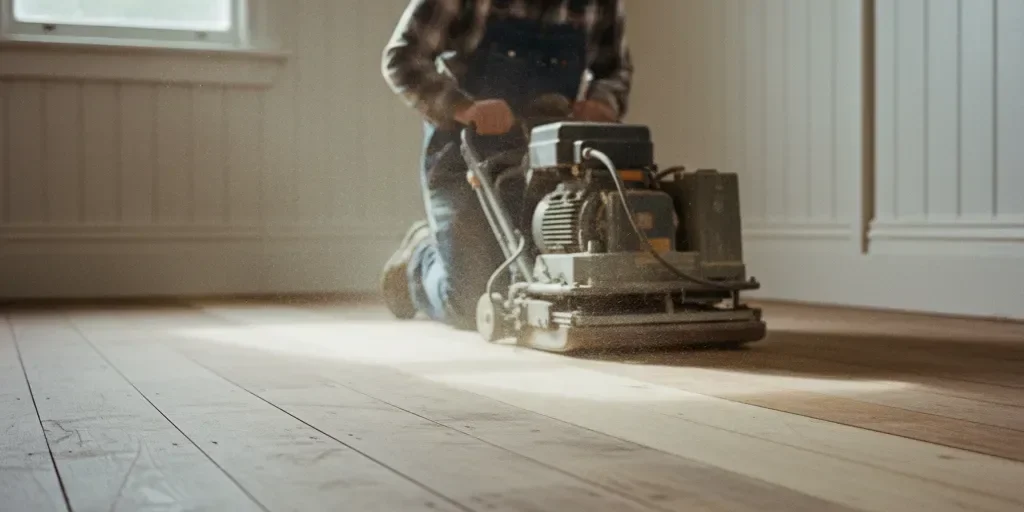
Heritage and villa floor sanding is distinct from the sanding of contemporary timber floors; it is not the same trade at all.

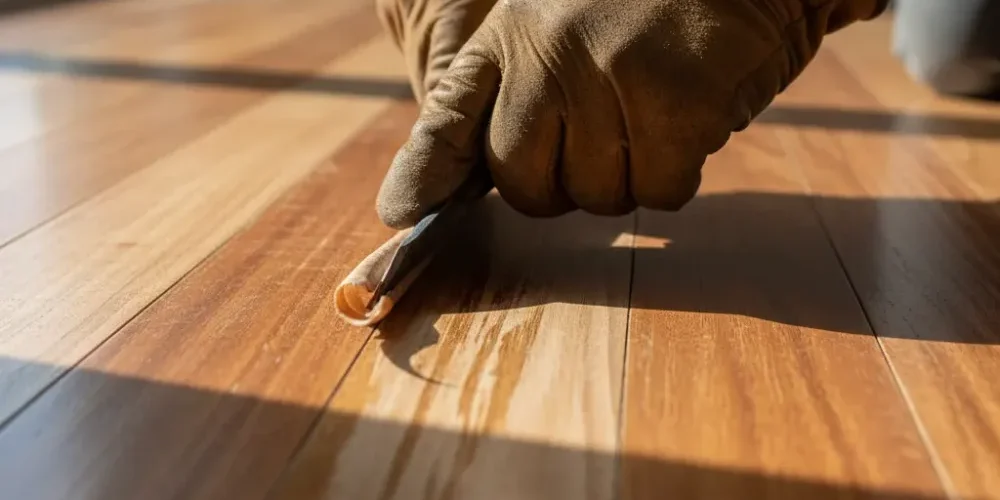
Gloved hands scraping old varnish from a Rimu floorboard with a hand scraper, curl of finish lifting from the grain.

The average Auckland villa was erected between the 1880s to the 1920s, meaning its timber flooring has been subjected to 100 years of footfall, furniture marks, spilled paint, and moisture expansion., it needs to be treated like it is. It’s not as simple as putting a heavy drum sander over an aged Kauri or Rimu floor and hoping for the best. The timber in those floors was never very thick to start with, and many times, they’ve already been sanded over the years, sometimes three or four times. This kind of situation, we come across in homes throughout Grey Lynn and Ponsonby weekly.

Here’s exactly what the process involves when it’s done correctly:

  1. Initial Assessment: Each individual floorboard needs to be evaluated before work begins by checking for loose nail heads, previous patches, unseen flaws and any remaining timber thickness remaining.
  2. Repairs Before Sanding: Replacement of any damaged, or missing floorboards will be necessary before starting the sanding phase, as well as filling of gaps in the flooring.
  3. Graduated Sanding: A series of finer grades are used to sand progressively through several coats. The finer timber requires a gentler touch, as Kauri in particular requires more care not to grind out too much detail or end up in soft wood below.
  4. Detail Edging: Wherever there is an edge, it needs to be dealt with by hand or by using a small edging sander, especially when working around awkward shapes in a typical villa that can be found near skirtings.
  5. Finishing: Your chosen finish will be then applied, be this a water-based polyurethane coating, a hardwax oil or some type of stain that will match the floor to its previous appearance.

The key aspect of any such work is patience, something that is not present on standard floors. Auckland villa flooring often has an undulating surface, due to decades of floorboard movement, resulting in minor dips and crowning. The floors cannot be rushed in the same way you might rush standard flooring, or you’ll end up with a wavy and uneven finish that will be highlighted by the light hitting any shadows.

Anyone who has been into an old villa where the floors are completely refinished but still retain that old charm and character can attest to that. A quality old floor restoration brings life to a home without losing the original look.

Most people don’t know that controlling sanding dust is even more important in older properties, which often come complete with ornate ceiling roses, original plasterwork, and heritage fireplaces. We always work with dust extraction to avoid the nightmare that can arise when attempting to clean sanding dust from every nook and cranny in a typical old villa.

Can Your Old Villa Floors Be Salvaged?

The most frequently asked question when it comes to vintage floor restoration is this. When you’ve just purchased a villa in Grey Lynn or Ponsonby, and you rip up the carpet only to reveal what looks like the worst ever floors, you will often ask if it is still possible to salvage them.

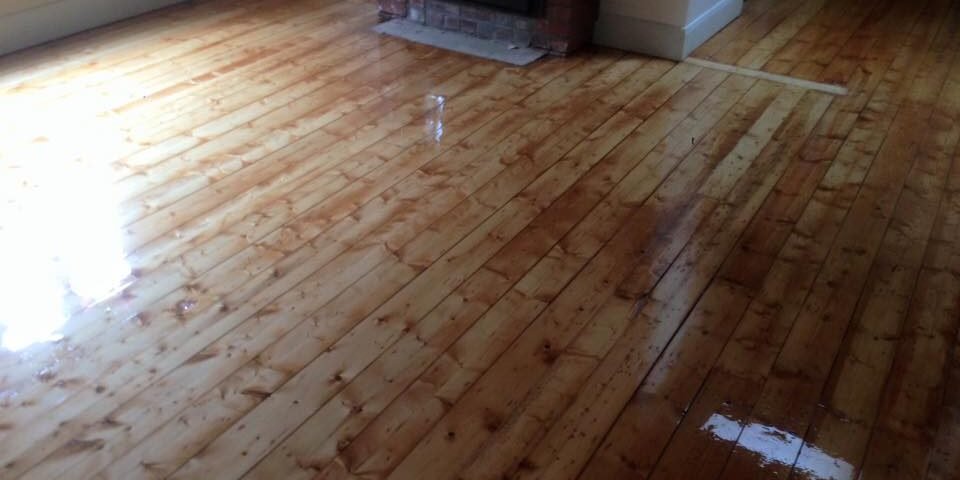
Freshly sanded and oil-finished Kauri floorboards gleaming in afternoon light inside an Auckland villa living room.

And the answer is yes, it is.

Our team has a few steps that we go through when every floor when first visiting an Auckland villa. The amount of timber visible above the tongue of each floorboard is one of the critical pieces of information we’re looking for. Most of the original Kauri and Rimu boards came milled thick. Even with several rounds of sanding over the years, there is frequently sufficient timber to proceed. We verify this using a gauge which takes approximately thirty seconds per board.

Indicators Your Flooring Remains Viable

  • The boards are firm with no significant bounce or depressions
  • The original timber grain is visible beneath the existing finish or paint
  • Nail heads are either flush or slightly recessed
  • Joint spacing is uniform, rather than tapering in a single direction

However, some conditions do signal potential issues. Wood that flakes when probed with a screwdriver is showing signs of borer damage or rot. This does not signify total loss, however; we often isolate and replace damaged sections via our floorboard replacement and repairs before sanding the entire surface even.

What of paint? Auckland villas frequently conceal heritage floors beneath thick layers of lead paint. That does not mean the project is impossible. It does alter the method, specifically regarding dust control measures for lead, but the timber below is often in immaculate condition. The paint effectively preserved it.

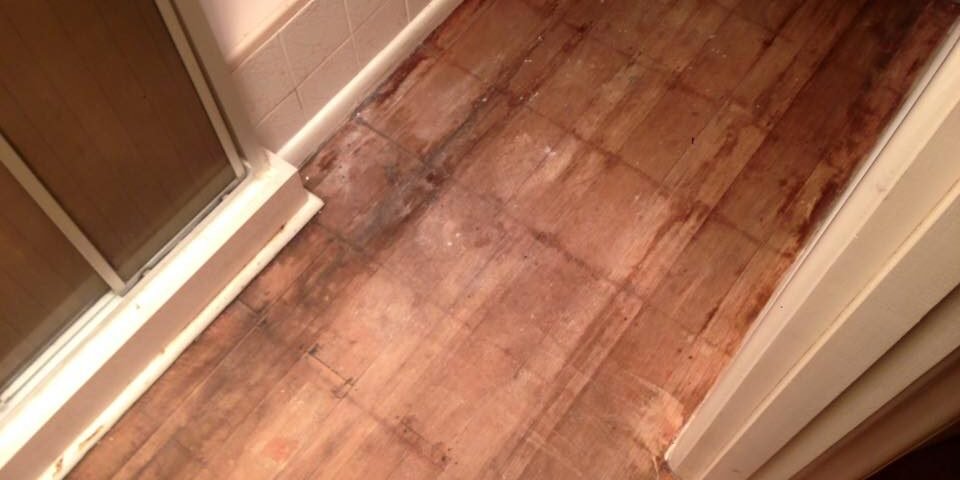
Water stains also cause anxiety. Those dark circles from leaky pipes or worn doorways look terrible. They are normally superficial. Heritage & Villa Floor Sanding eliminates them with the initial heavy pass, leaving the floorboards clear.

Uncertain what’s hiding beneath the carpeting? Give us a call. Our service spans the whole of Auckland with on-site evaluations, where we can immediately assess viability. No guesswork.

Selecting the Correct End Coat for Kauri and Rimu Floors

This is frequently where most clients find themselves stuck. It is the pivotal choice.

Classic Auckland villa exterior with open front door revealing partially sanded Kauri floorboards inside the hallway.

Kauri and Rimu exhibit entirely different characteristics based on the finish applied. We witness this constantly. A customer will select an end coat based on a snapshot they found online, and when it is applied to a 120-year-old Ponsonby villa, the outcome isn’t what was anticipated. The specific timber, its age, and sun exposure to the room all shift the outcome.

Polyurethane Finish vs. Natural Oil

There are two predominant choices for heritage floors in Auckland: water-based polyurethane and hardwax oil. They achieve distinct effects.

  • Water-based polyurethane sits atop the wood. It creates an ultra-clear, durable shield excellent for high traffic areas such as living rooms and hallways.
  • Hardwax oil penetrates deeply. It provides a warm, natural finish for both Kauri and Rimu that feels as fresh as the moment the planks were milled. Repairs are also simpler.
  • Polyurethane is the better choice if you are looking for something that will dry quickly and resist spills. Oil finishes may require touchups more frequently, but they also feel softer underfoot.
  • Kauri tends to develop a yellowish hue over time with oil products. Water-based formulas keep Kauri nearer to its natural honey colour.

Rimu is more forgiving. Its deep red-brown grain looks rich under almost anything. But Kauri needs a lighter touch. We always test a small section first so you can see the result before we commit to the whole floor.

Sheen Levels and Staining

Most Auckland heritage homes look best with a satin or matte finish. High gloss can feel out of place in a character villa. It also shows every scratch and dust particle.

Staining is another option. Some owners in Grey Lynn and Herne Bay want to darken their Rimu or match new boards to old ones. We handle floor staining and colour matching as part of the process, so the blend looks seamless. If your home is listed or scheduled, it’s worth checking Auckland Council’s heritage property conservation advice before committing to a finish, as some properties have specific requirements around materials and treatments. Not sure which direction to go? Give us a call and we’ll walk you through it on site.

The right finish protects your floor for years. The wrong one just creates more work down the track.

Need help with heritage & villa floor sanding?

09 888 0793

Request a free quote. Floor Sanding Auckland Experts is ready to help.

The Gap-Filling Decision on Heritage Floorboards

Gaps between boards are normal in old Auckland homes. Full stop.

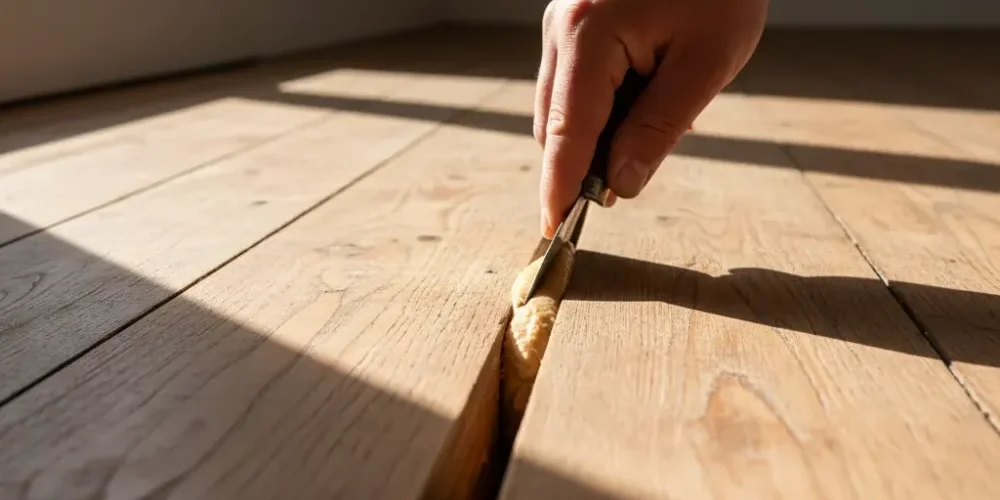
Person pressing flexible gap filler into a wide gap between two Rimu floorboards using a putty knife at floor level.

Timber moves. It swells in winter when humidity climbs, it shrinks back in summer. A villa floor in Ponsonby that’s been down for 90 years has been through thousands of those cycles. So when you see gaps between your floorboards, that’s not damage. That’s timber doing what timber does. The real question is whether those gaps should be filled before we sand, and the answer isn’t always yes.

We see this every week. Homeowners assume every gap needs filling. But filling gaps that are still actively moving just creates a bigger mess down the line. The filler cracks, lifts, or pops out entirely. Then you’re back where you started with bits of dried filler scattered across the floor.

When We Fill and When We Don’t

Here’s how we think about it during heritage and villa floor sanding. Gaps under about 2mm usually get left alone. They’re part of the floor’s character, they don’t collect much debris, and they’ll close up again when the weather shifts. Gaps between 2mm and 5mm are the sweet spot for filling. We use a mix of sanding dust from your actual boards and a flexible resin. That way the colour matches and the fill has some give to it.

Anything wider than 5mm? That’s a different conversation. Sometimes we’ll cut timber slivers and glue them in. Sometimes the boards need lifting and re-laying to close the gaps properly. It depends on the species, the subfloor condition, and what you’re trying to achieve.

  • Kauri and rimu boards tend to gap more than matai
  • Boards placed near radiators and other heat sources expand more quickly and create wider gaps.
  • Under-floor ventilation is : ground-floor villas with restricted airflow retain more moisture and the gap behavior differs.
  • Different gaps occur with tongue and groove boards compared to plain-edge boards.

Not sure what your floor requires? Give us a call. We’ll come and advise you.

One thing that can ruin a job is the choice of a gap filler. We’ve had to lift filler that cracked down after just one season in Auckland villa floors because they were using a filler that wasn’t suitable for flooring. Getting this aspect right is key to creating the most successful final result and is something people often underestimate as being important to getting a good look and feel to the finish.

What you can expect during and after the sanding of your floor

Floor sanding always evokes images of a dusty job, which it is. But heritage and villa floor sanding has made great strides from where it was years ago, such as back in the 1990s.

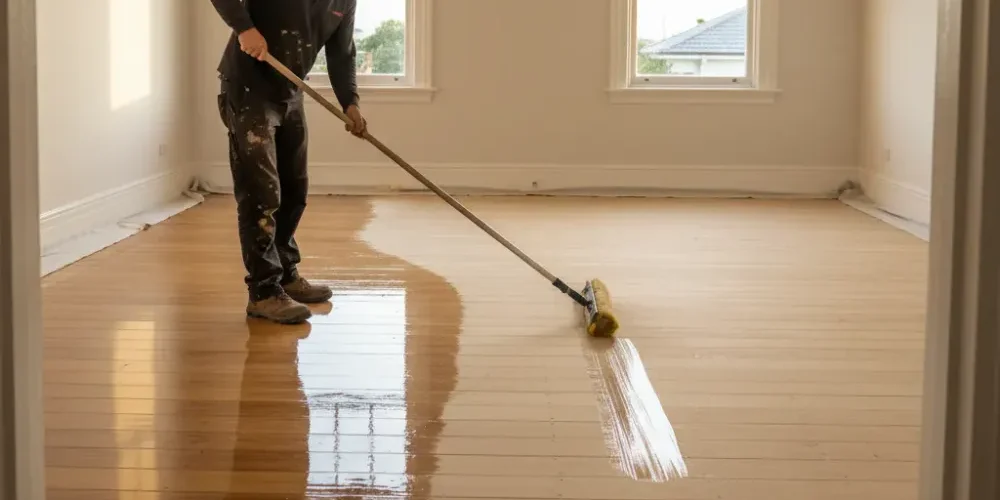
Person applying satin polyurethane finish to sanded Kauri floorboards in an Auckland villa bedroom using a lambswool app.

We use dust extraction that removes almost all of the airborne dust while sanding. Your house won’t be dust-free when the job is being done but it certainly won’t be like the dust-filled disaster that people have described from those previous eras. We’ll use plastic to create barriers in all the doorways and so prevent the dust getting into the rest of your property although we would always recommend that soft furnishings and furniture are cleared from the rooms being worked on before we arrive.

What to expect on the day

We follow the typical pattern when working on a house to restore a heritage floor:

  1. We walk the floors one more time to identify any boards that need attention, such as loose nails, boards that have lifted slightly or boards that are in need of more repair than just the gap filling.
  2. Initial sanding with the coarse grit paper that takes us down to the raw wood.
  3. Progressing through increasingly finer grit paper to sanding the floor to get it smooth and remove less timber than necessary.
  4. Filling the gaps with a mixture matched to the floor type between passes through the floors using progressively finer sanding papers.
  5. The final fine-sanding to prepare the floor for your final finish.

In a typical villa of two or three rooms in Ponsonby, the sanding process will usually take between one and two days.

After the sanding is complete, finishing your floor will normally add another day or two depending on the type of floor oil and the weather (drying) conditions.

After we are finished

When the final finish has been applied, patience is important. The floor will usually be able to be walked upon in socks after 24 hours, although it will take longer before furniture can be replaced and rugs laid on the floor.

The final thing we always suggest when working on an Auckland home is that we keep windows slightly open when the floors are drying so that there is air circulation, especially with water-based polyurethane finishes that can also be affected by humidity.

The floor will appear much lighter than you may think, which is normal. The colour will deepen a bit as it cures over the first few weeks and we often get calls from people concerned with the colour when the job is first done but then love the floor two or three weeks later.

Do you want to know what your floors will look like? Give us a call and we’ll explain it to you.

Frequently Asked Questions

Common questions about heritage & villa floor sanding services

Can you sand Auckland villa floors that have been painted with lead paint?

Yes, lead paint on villa floors is not a dealbreaker. The timber underneath is often in great condition because the paint actually protected it for decades. What changes is how we handle dust containment during sanding. We use dust extraction systems and take extra care to contain fine particles. This is especially common in older Auckland villas built before the 1940s. The process takes a little longer, but the results are just as good.

How do I know if my villa floorboards have enough timber left to sand again?

We check the board thickness above the tongue-and-groove joint — that tells us straight away if there’s enough timber left. Most original Kauri and Rimu boards were milled thick, so even after previous sandings there’s usually enough left for another round. We measure this with a simple gauge. It takes about thirty seconds per board. If you’ve just pulled up carpet in a Grey Lynn or Ponsonby villa and the boards look rough, call us for an on-site assessment before you assume the worst.

What finish works best on Kauri floors in an Auckland villa?

Water-based polyurethane is usually the better choice for Kauri floors. It keeps Kauri closer to its natural honey colour, while oil-based products can cause it to yellow over time. Hardwax oil is a good option if you want a softer, more natural feel underfoot and are happy to recoat more often. We always test a small section first so you can see the actual result on your specific floor before we commit to the whole room.

How long does heritage floor sanding take in a typical Auckland villa?

Most villa floor sanding jobs in Auckland take two to four days from start to finish. That includes inspection, any board repairs, the staged sanding process, and applying your chosen finish with drying time between coats. Heritage floors take longer than modern floors because of their uneven surfaces, tight corners near skirtings, and the lighter touch required on older timber. Rushing the job creates waves and uneven patches you’ll notice every time light hits the floor.

Will water stains on my villa floors sand out completely?

Dark water stains around old plumbing or near doorways usually sand out during the first heavy cut. They look bad under old carpet, but they’re almost always surface-level. Once that layer comes off, the boards underneath come up clean. This is one of the most common things we see in Auckland villas, and it surprises a lot of homeowners who assumed the staining had soaked all the way through the timber.

Ready to Get Started?

Request a free quote. Call 09 888 0793 today.

Call Now: 09 888 0793