Engineered Floor Work We Do
Our Auckland floor sanding team treats engineered boards with lighter passes than solid timber, because every millimetre of wear layer counts.
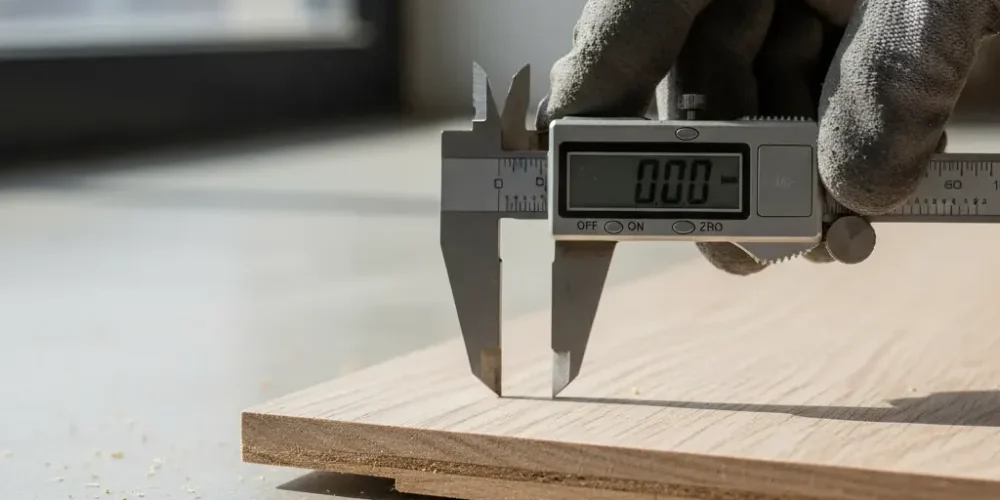
Wear Layer Check
Wear layers vary from brand to brand. Some boards have less than 2 mm of hardwood on top, and others have 4 mm or more. We measure the layer before quoting, because the measurement decides the job. A thick layer suits a full sand. A thin layer suits a buff and recoat, which takes off only the top of the old coating and leaves the hardwood alone.
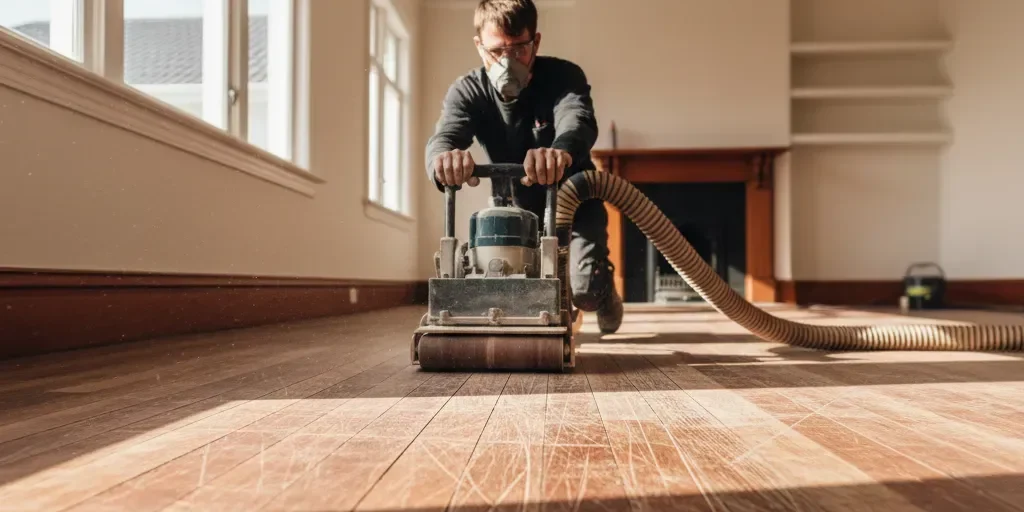
Factory Coatings
Most engineered boards leave the factory with a hard, UV-cured lacquer or oil. Those coatings resist wear well but take more work to sand off than a site-applied polyurethane. For a recoat, the factory coating must be abraded so the new coat bonds. We test adhesion on a small area first, since some factory oils do not accept a polyurethane recoat.
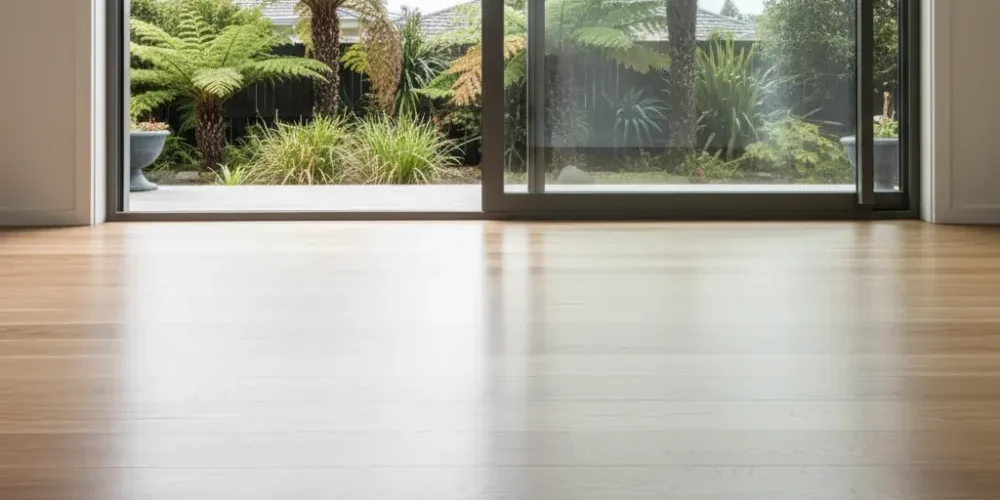
Bevelled Edges and Floating Floors
Many engineered boards have a small bevel along each edge, and dirt and old coating collect in that groove. A full sand flattens the bevel slightly, so the joints look tighter afterwards. Floating floors click together over underlay instead of being glued down. If a floating floor bounces underfoot, a drum sander can cut unevenly, so we check for movement at the site visit.
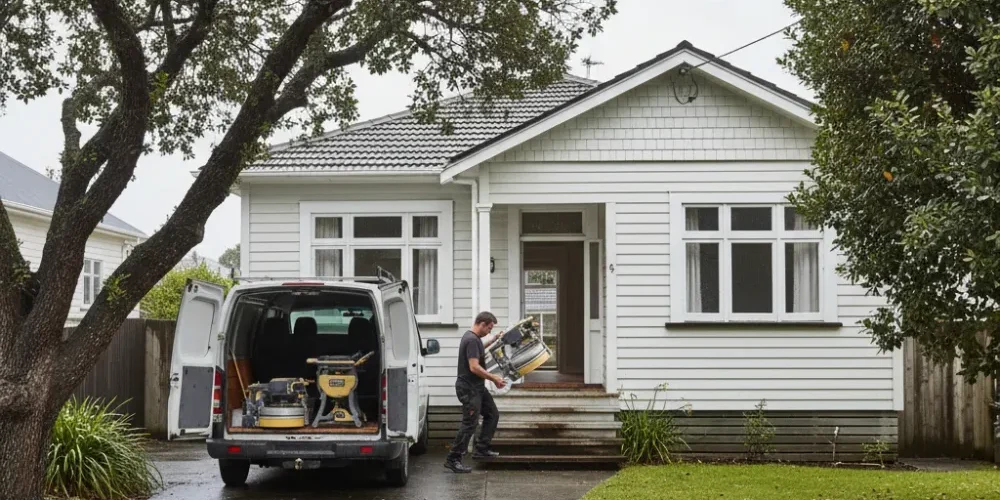
Buff and Recoat for Engineered Floors
A buff and recoat suits most engineered floors that are dull, scuffed or showing light traffic paths. It removes no hardwood, so it can be repeated many times over the life of the floor. Booking a recoat before the coating wears through to bare timber protects the wear layer, which is the part of the board you cannot replace.
How an Engineered Floor Job Runs
Five steps, with the wear layer measured first.
1. Call or send the quote form
Tell us the room sizes, roughly when the floor went down and the brand if you know it. We book a free site visit.
2. Wear layer check and written quote
We measure the wear layer, test the factory coating and check for cupping or bounce, then quote a full sand or a buff and recoat.
3. Clear the rooms
Move furniture and rugs out before the crew arrives. Skirting and door edges stay in place, and we work up to them.
4. Light sanding and three coats
A full sand runs at 40, 80 and 120 grit with lighter passes than solid timber, then three coats go on. A recoat skips the coarse grits.
5. Curing and aftercare
Socks after about 4 hours on water-based coats, about 24 hours on solvent-based. Furniture back after about 3 days, with felt pads under the legs.
Engineered Floor Sanding Prices in Auckland
$70 to $80 per m²
A buff and recoat costs $30 to $45 per m² plus GST, and suits most engineered floors. A full sand and three clear coats costs $45 to $90 per m² plus GST, with most standard rooms at $70 to $80 per m², where the wear layer is thick enough to take it.
The wear layer decides which of those two prices applies. Factory coatings that need extra abrasion, bevelled edges, floor area and furniture removal also move the price. Your written quote after the site visit tells you which option suits your boards and why.
Why Auckland Owners Book Us for Engineered Floors
An engineered floor gives you one chance to get the sanding right.
25+ years of sanding
Our crew has sanded solid and engineered timber in Auckland homes for more than 25 years.
Qualified and insured
Our floor sanders are qualified and the business carries insurance. Ask for the details at the site visit.
80% dust-free sanding
Extraction on our sanders keeps most of the dust out of new kitchens, cabinetry and joinery.
Measured before quoted
We measure the wear layer first and quote the option your boards can take.
Recoat when it is enough
If a buff and recoat will do the job, we quote it and leave the hardwood on the boards.
5.0 stars on Google
We hold 5.0 stars from 40+ Google reviews from Auckland homeowners.
New Auckland Builds, Concrete Slabs and Engineered Floors
Many engineered floors in Auckland sit over a concrete slab, and new slabs hold a lot of water. BRANZ notes that a week after pouring, the slab for a 100 m² house still holds about 1,000 litres of water, and a 100 mm slab takes at least 4 months to dry. It advises a slab relative humidity reading below 75% before fixed floor coverings go down (BRANZ Bulletin 587, 2015).
When boards go down on a slab that is still drying, the moisture can push up into them. The edges of each board lift, called cupping, or the joints open as the boards dry out later. Sanding a cupped floor flat while the moisture is still there is a mistake. When the boards dry, the centres sink and the floor crowns the other way.
If your engineered floor has cupped or gapped in a newer Auckland home, the moisture source needs fixing first. We check the pattern at the site visit and tell you whether sanding will help yet.
Google Reviews from Auckland Floor Owners

Molly Smith
Google review
“Our 15-year-old white oak floors have been completely revitalized and look like brand new, with a smooth finish and natural appearance. … He made sure to explain every element involved so we could get exactly what we wanted.”
Simon Smith
Google review
“Once the old marks and worn coating were removed, they applied a water-based finish. … They kept to the timeline they gave us, explained when we could walk on the floor again.”
Cris Gonzales
Google review
“They did an outstanding job sanding and refinishing my hardwood floors. The final result is truly impressive. the floors look completely renewed. They maintained a clean workspace throughout and completed the project on schedule.”
Engineered Timber Floor Sanding FAQs
Yes, if the hardwood wear layer is thick enough. Boards with a thick wear layer can take a full sand. Thin wear layers suit a buff and recoat instead. We measure the layer before quoting.
Book a free site visit
Floor Sanding Auckland Experts
Sanding, buff and recoats and finish advice for engineered oak and hardwood floors across Auckland.
Mon to Fri, 7am to 7pm
Weekend work by appointment. Free site visits across Auckland.
