Gym Floor Sanding and Polishing
Gym Floor Sanding and Polishing
What’s Covered on This Page
- Signs Your Gym Floor Needs Sanding and Polishing
- Full Sand vs. Screen-and-Recoat: Choosing the Right Service
- How the Sanding and Polishing Process Works
- Sport-Specific Finishes for Competitive and School Facilities
- Planning Around Auckland’s Seasonal Booking Windows
- How long does a gym floor sanding and polishing job take in Auckland?
- Can you sand and polish a gym floor without shutting the facility down for a week?
- How does Auckland’s climate affect gym floors over time?
- What’s the difference between a full sand and a screen-and-recoat for a gym floor?
- How do I know if my gym floor actually needs sanding or just a clean?
- What should I do to prepare my Auckland gym before the sanding crew arrives?
Signs Your Gym Floor Needs Sanding and Polishing
Most people call us too late. By the time they pick up the phone, the floor’s already past the point where a simple buff and recoat would’ve done the job. Knowing what to look for saves you money and keeps your gym safer.
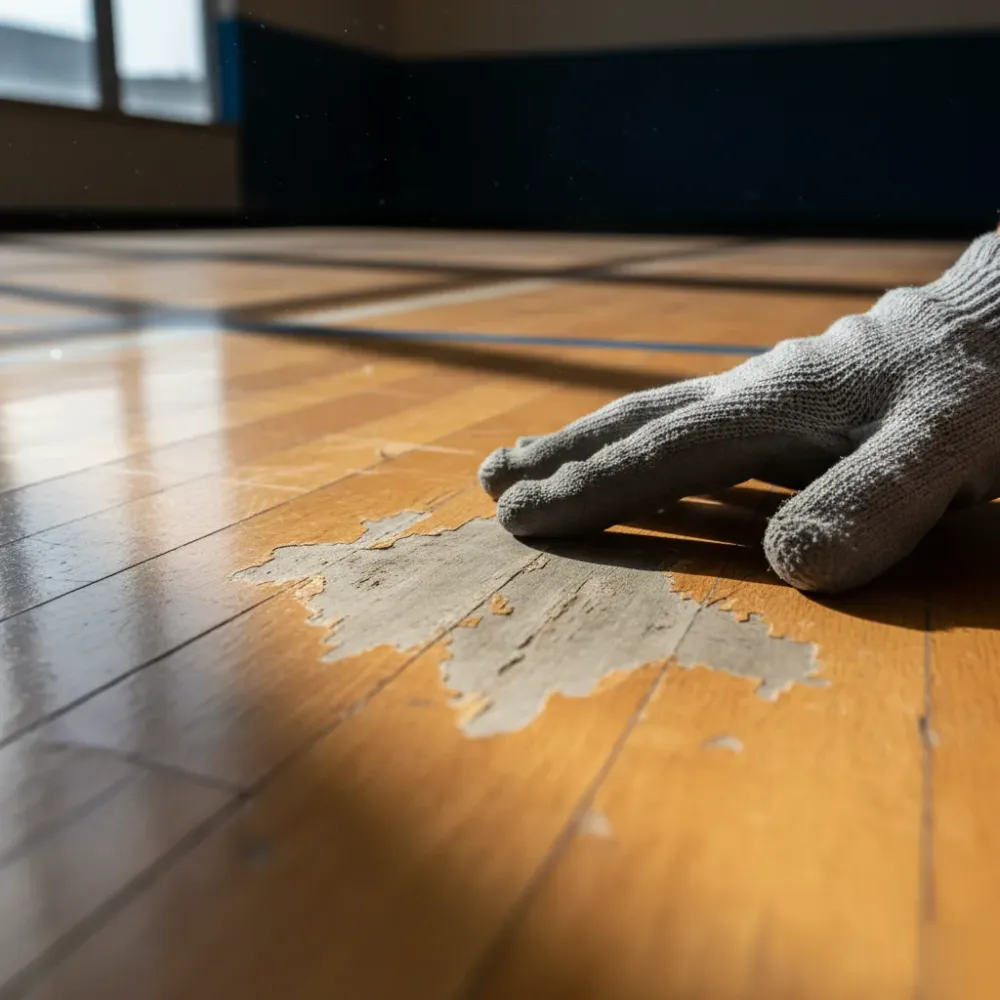
The finish tells you everything. Walk across the court under good lighting. If you see dull patches where the polyurethane has worn through, that’s bare timber exposed to sweat, moisture, and shoe grime. Once moisture gets into unprotected timber, you’re looking at swelling, cupping, and eventually board replacement. We see this every week in Auckland gyms that run basketball leagues and indoor netball.
What to Watch For
Here are the most common signs we find when we inspect gym floors across Auckland:
- Court lines fading or peeling away from the surface
- Grey or black marks that won’t come up with regular cleaning
- Boards feeling rough or splintery underfoot
- Visible scratches catching the light in long streaks
- Sticky or tacky patches where old finish has broken down
That sticky feeling is a big one. Players notice it before anyone else does. Their shoes grab instead of glide. It changes how they move, and it raises the injury risk on every pivot and stop. A gym floor in Epsom we worked on last year had three rolled ankles in one term before the school called us in.
Splintering is the one you can’t ignore. Even small splinters mean the finish barrier is gone and the timber grain is lifting. Once that starts, it spreads fast under heavy foot traffic.
Not sure if your floor’s actually bad enough to need work? That’s pretty common. Some floors look rough but only need a recoat. Others look okay from a distance but are failing up close. The difference matters because it changes the scope of the job.
Here’s a quick test. Pour a small amount of water on the floor surface. If it beads up, your finish still has life. If it soaks in or darkens the timber within a few seconds, that floor needs sanding and polishing before real damage sets in. Don’t wait for a complaint or an accident to force your hand.
Full Sand vs. Screen-and-Recoat: Choosing the Right Service
This is the question we get asked most. The answer depends on what’s happening under your feet right now.
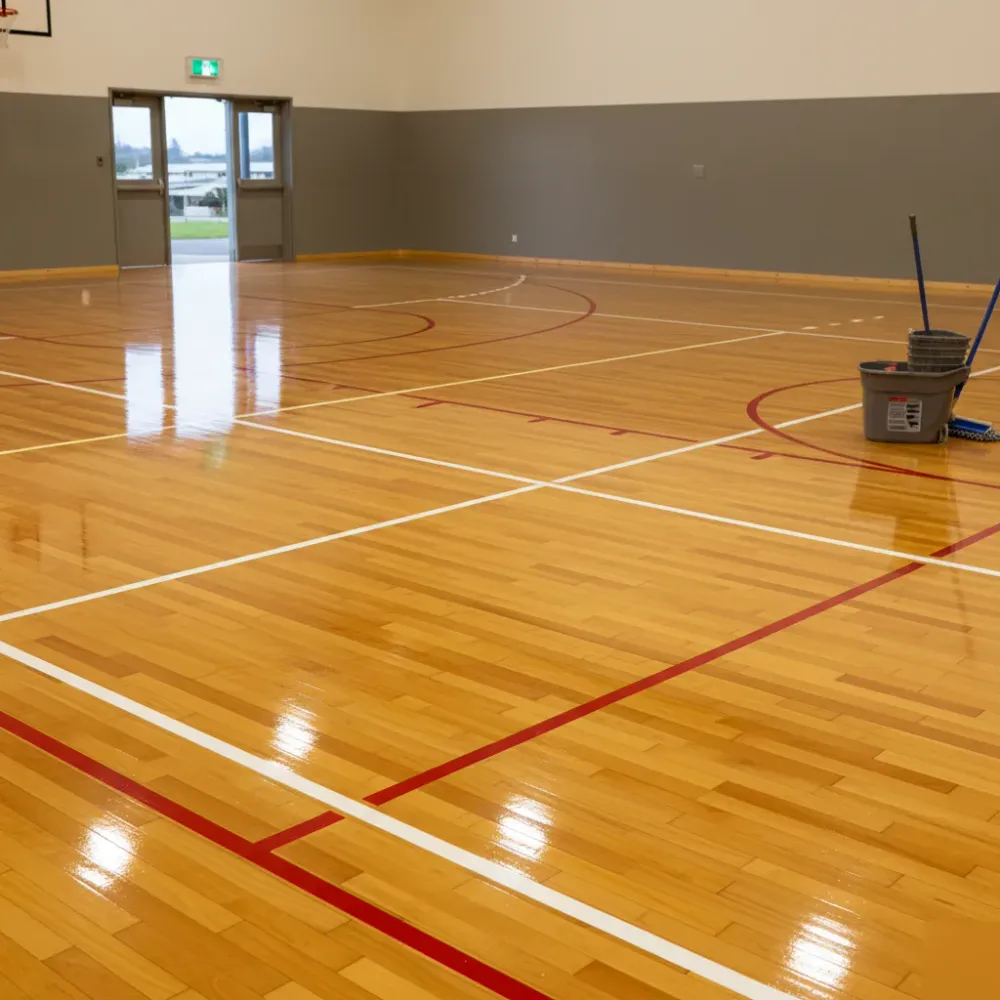
A full sand strips everything back to raw timber. We’re talking multiple passes with heavy drum sanders, removing old polyurethane, stains, scuff marks, and surface damage down to fresh wood. It’s the reset button. For gym floors across Auckland that haven’t been touched in ten or fifteen years, a full sand is usually the only real option. The old finish is worn through in the high-traffic lanes, the court lines are peeling, and the timber looks grey in patches. Sound familiar? That’s a full sand job.
A screen-and-recoat is different. We lightly abrade the existing finish with a buffer, clean the surface, then apply a fresh coat of polyurethane on top. No heavy sanding. No raw timber exposed. It’s faster and works well when the current coating still has life in it but looks tired.
Here’s how to know which one your gym floor needs:
- Bare timber showing through the finish in walkways or under hoops means full sand
- Court lines faded but finish still intact across most of the floor means screen-and-recoat could work
- Water damage, deep gouges, or black marks that won’t buff out means full sand
- Floor was recoated within the last three to five years and just looks dull means screen-and-recoat
We see a lot of school halls and community centres around Mt Albert and Grey Lynn where someone’s tried to recoat over a finish that was already too far gone. It doesn’t hold. The new coat peels within months, you end up paying twice. It’s the same story.
When a recoat is the right call, it saves real time. We can screen and recoat a gym floor in Auckland over a weekend, and have it ready for Monday morning. A full sand takes longer because we’re building the finish from scratch. Both get good results when matched to the right floor condition.
Not sure which one you need? Give us a call and we’ll come take a look.
How the Sanding and Polishing Process Works
We get asked this a lot. People want to know what actually happens when we show up with the gear. Fair enough. Here’s how we run a gym floor job from start to finish.
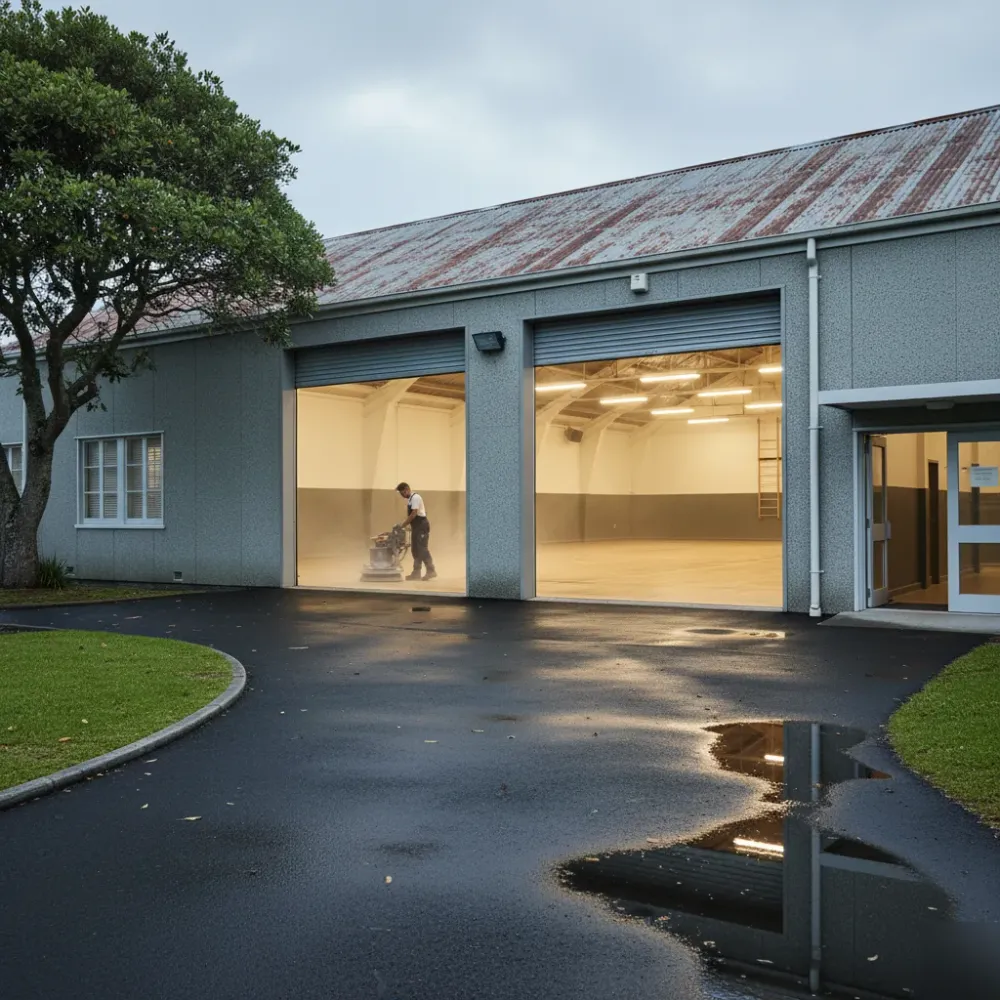
Every job starts with a proper look at the floor. We check for loose boards, moisture problems, old finish buildup, and any damage around high-traffic zones like under basketball hoops or near doorways. Auckland gyms cop a beating, especially school halls around Epsom and Mt Eden that run assemblies, sports, and community events on the same surface week after week.
Once what we’re dealing with, the work follows a clear sequence:
- We clear the space and tape off anything that needs protecting. Walls, equipment anchors, line marking hardware.
- Coarse sanding strips back the old finish and levels out any uneven patches. This is where years of scuff marks and worn polyurethane come off.
- We move through finer grits, smoothing the timber down until it’s clean and even across the whole surface.
- Gap filling comes next. We pack any gaps between boards with a flexible filler matched to the timber species.
- Court lines and game markings go down if needed, painted directly onto the bare timber before any finish is applied.
- We apply the finish coat. For most Auckland gyms we use a water-based polyurethane system. It dries faster and handles foot traffic better than solvent-based options.
- Final inspection. We check every square metre under proper lighting before we sign off.
The whole process usually takes a few days depending on floor size and how many coats are needed. We can work around your schedule so disruption stays minimal.
The sanding stage is where dust management and worker safety matter most. Timber sanding generates fine particulate dust, and on older gym floors there can be residues from previous coating systems. Our crew follows safe working practices throughout, including proper dust extraction and respiratory protection. For anyone managing a facility or overseeing floor work, the Working with silica safety guide is a useful reference for understanding dust hazards during sanding work.
The sanding stage is actually the easy part. It’s the preparation and finishing that make or break the result. A rushed finish will peel within months. We’ve seen it on floors other crews have done. The coating lifts right off because the surface wasn’t prepped properly.
Want to chat about your gym floor? Give us a call and we’ll walk you through what your space needs.
Need help with gym floor sanding and polishing?
Request a free quote. Floor Sanding Auckland Experts is ready to help.
Sport-Specific Finishes for Competitive and School Facilities
Not every gym floor finish works for every sport. That’s something we explain to Auckland school boards and sports clubs all the time.
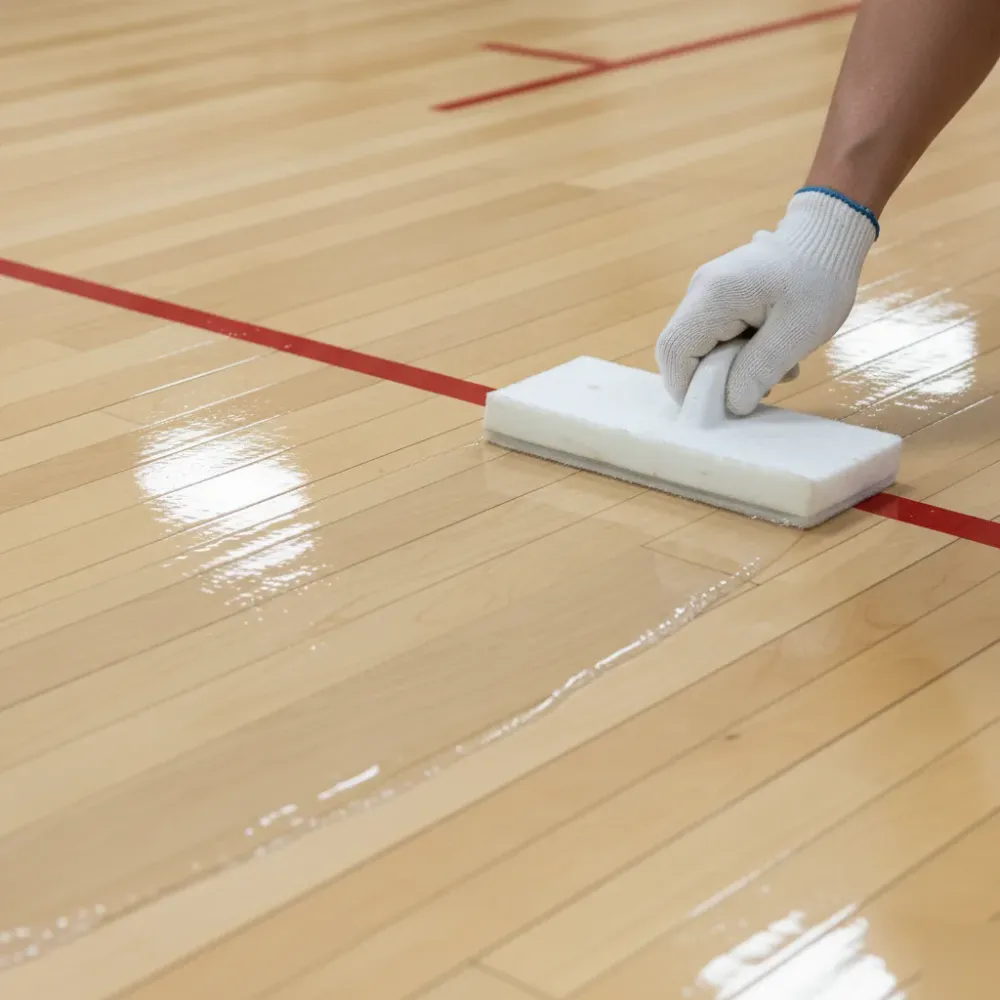
A basketball court needs a different level of grip than a multipurpose hall used for indoor cricket, futsal, and assembly seating. The finish you choose affects player safety, ball bounce, and how long the floor holds up between maintenance cycles. Get it wrong and you’ll have players slipping, or a surface that scuffs out within a single season.
What Goes Into Choosing the Right Finish
We look at a few things before recommending a finish system for your facility:
- Primary sport or activity type and how often it’s played
- Whether the space doubles as a community hall or event venue
- Foot traffic volume, including non-sport use like school assemblies
- Line marking requirements for single-sport or multi-sport layouts
A dedicated basketball facility in Ellerslie will get a different recommendation than a school hall in Mt Albert that hosts everything from badminton to prize-giving. We’ve done both. The finish needs to match the actual use, not just look good on day one.
For competitive venues, we typically apply water-based polyurethane systems that meet Sport New Zealand’s guidelines for slip resistance and ball rebound. These finishes cure hard and sit flat. They don’t build up a thick rubbery layer that changes how the floor plays.
School halls across Auckland take a beating. Kids drag chairs, stack tables, run in street shoes. So we lean toward finishes that handle abrasion without yellowing or peeling. We’ve seen schools where the previous contractor used a product that was too soft for the traffic it got.
Line markings need to go down between coats, not on top. If the lines sit on the surface, they wear off in months. We sand, apply a seal coat, lay the lines, then lock them in with final coats. That’s how they last.
The finish is only half the job. The sanding prep underneath determines whether that coating bonds properly or flakes within a year. We see failed finishes in Auckland gyms regularly. Almost always it’s a prep issue rather than a product issue.
Planning Around Auckland’s Seasonal Booking Windows
Most gym managers in Auckland ring us at the worst possible time. Right before term starts, two weeks out from a tournament, or the day after a flood. We get it. Floors aren’t something you think about until they’re a problem.
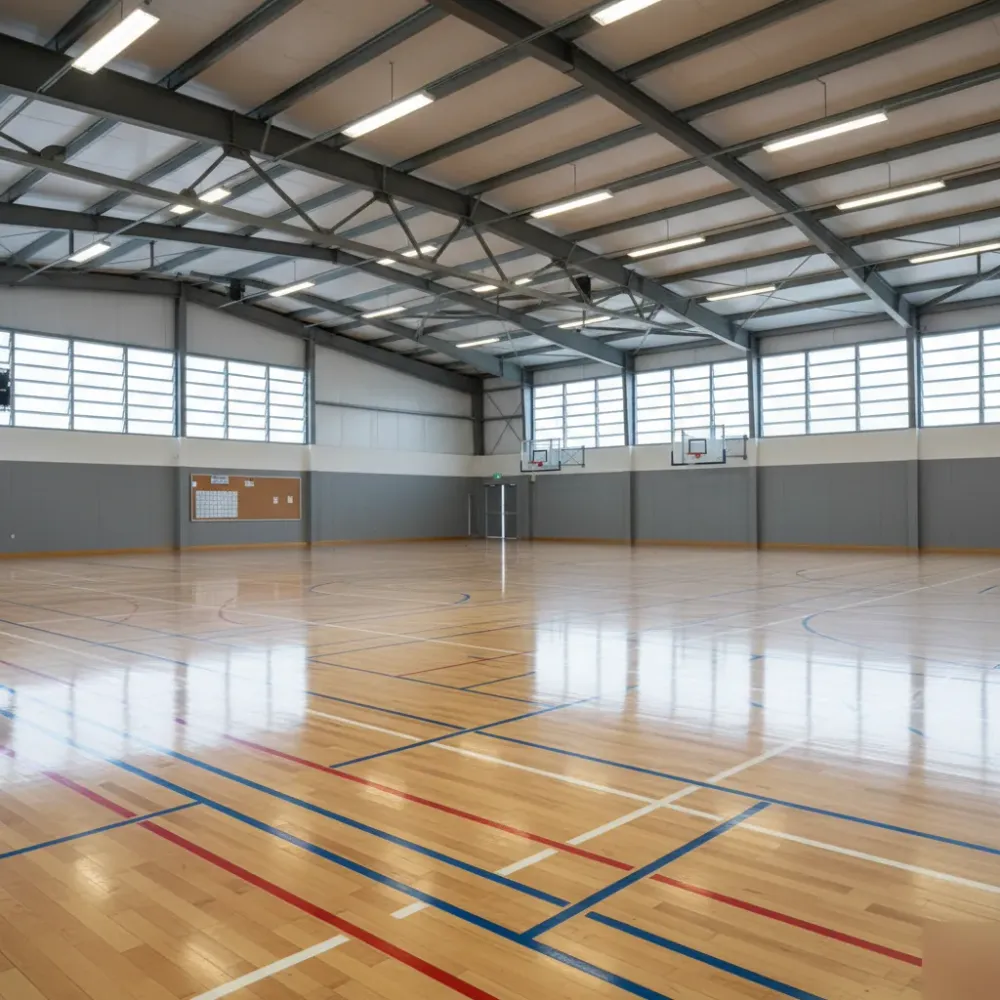
But here’s the thing. This kind of floor work takes time. Not just the work itself, but the curing period after. You can’t have kids running across a freshly coated surface the next morning. So planning ahead matters more than people realise.
When to Book
The best windows for gym floor work in Auckland line up with school holidays. December through January is our busiest stretch, and for good reason. The gym sits empty for weeks. That gives us time to sand, apply multiple coats, and let everything cure properly before anyone steps foot on it again.
April and July holidays work too. They’re just tighter. We’ve done plenty of jobs in the Ellerslie and Mt Albert area over mid-year breaks. Two weeks is enough if we’re booked early and the scope is clear.
Here’s what catches people out:
- Waiting until November to book a January job. We’re usually full by then.
- Forgetting about ventilation needs in winter. Cooler Auckland temperatures slow drying times.
- Not factoring in furniture and equipment removal. That adds a day on each end.
We recommend reaching out at least six to eight weeks before your preferred start date. That gives us time to inspect the floor, confirm what’s needed, and lock in a crew. The schools and clubs that plan ahead get the best results because nothing feels rushed.
And if you’ve got a tournament or event driving the deadline, tell us upfront. We’ll work backwards from that date and let you know whether it’s doable. Sometimes it means adjusting the finish type or scheduling a buff and recoat instead of a full sand. We’d rather give you a realistic plan than promise something we can’t deliver.
Auckland’s humidity plays a role too. Summer gives us faster cure times. Winter jobs need more breathing room between coats. Either way, we plan for it.
Frequently Asked Questions
Common questions about gym floor sanding and polishing services
How long does a gym floor sanding and polishing job take in Auckland?
Most gym floor jobs in Auckland take two to four days from start to finish. A screen-and-recoat on a floor that’s still in reasonable shape can often be done over a weekend, ready for Monday morning. A full sand takes longer because we’re building the finish from bare timber up. Floor size, the number of coats needed, and drying time between coats all affect the timeline. We work around your schedule to keep disruption as short as possible.
Can you sand and polish a gym floor without shutting the facility down for a week?
Yes, in most cases you won’t need a full week of downtime. A screen-and-recoat can be completed over a weekend with no Monday disruption. A full sand on a standard gym floor usually wraps up in two to four days. We plan the job around your booking calendar so players and staff aren’t locked out any longer than necessary. The key is booking before the floor gets to the point where extra repairs add time to the job.
How does Auckland’s climate affect gym floors over time?
Auckland’s humidity is one of the biggest reasons gym floors fail faster here than in drier parts of New Zealand. Moisture gets into unprotected timber and causes swelling, cupping, and board movement. School halls and community gyms that run year-round are especially vulnerable because the floor never gets a real break from foot traffic and humidity. Keeping the finish intact is your best defence. Once the polyurethane wears through, moisture gets in quickly and the damage spreads fast.
What’s the difference between a full sand and a screen-and-recoat for a gym floor?
A full sand strips everything back to raw timber using heavy drum sanders. It removes old polyurethane, stains, scuff marks, and surface damage completely. A screen-and-recoat lightly abrades the existing finish and applies a fresh coat on top without exposing raw timber. If your finish is worn through in high-traffic lanes or under the hoops, you need a full sand. If the coating still covers the floor but just looks tired and dull, a screen-and-recoat is usually the right call.
How do I know if my gym floor actually needs sanding or just a clean?
Pour a small amount of water on the floor surface. If it beads up, your finish still has life and a clean or light recoat may be enough. If the water soaks in or darkens the timber within a few seconds, the finish is gone and you need sanding and polishing before real damage sets in. Grey patches, sticky spots, splintering boards, and court lines peeling away are all signs the floor is past the point where cleaning will help.
What should I do to prepare my Auckland gym before the sanding crew arrives?
Clear the floor completely before we arrive. That means removing all portable equipment, benches, and anything stored on the court surface. Fixed equipment like wall padding or anchor hardware doesn’t need to come out — we tape and protect that on our end. The more open the floor, the faster we can move through the job. If you’re unsure what needs to be moved, just ask us when you book and we’ll walk you through it.
Ready to Get Started?
Request a free quote. Call 09 888 0793 today.
