Engineered Timber Floor Sanding
Trusted Flooring Professionals
No Hidden Cost, On Time & On budget
Over 30 Years Of Experience
What's Covered on This Page
- What Makes Engineered Timber Floor Sanding Different From Solid Timber
- How Professionals Assess Whether Your Floor Is Ready to Sand
- The Step-by-Step Sanding Process for Engineered Timber Floors
- Finish Options That Suit Auckland's Humid Climate
- How Many Times Engineered Timber Floors Can Be Sanded
- Can engineered timber floors in Auckland apartments actually be sanded?
- How do I know if my floor has already been sanded too many times?
- Does Auckland's humidity affect engineered timber floors before sanding?
- What's the difference between a floating floor and a glued-down floor when it comes to sanding?
- How long does the sanding process take from start to finish?
- What should I do to prepare before the team arrives?
What Makes Engineered Timber Floor Sanding Different From Solid Timber
Solid timber is thick all the way through. You can sand it down multiple times over its life. Engineered timber doesn't work that way.
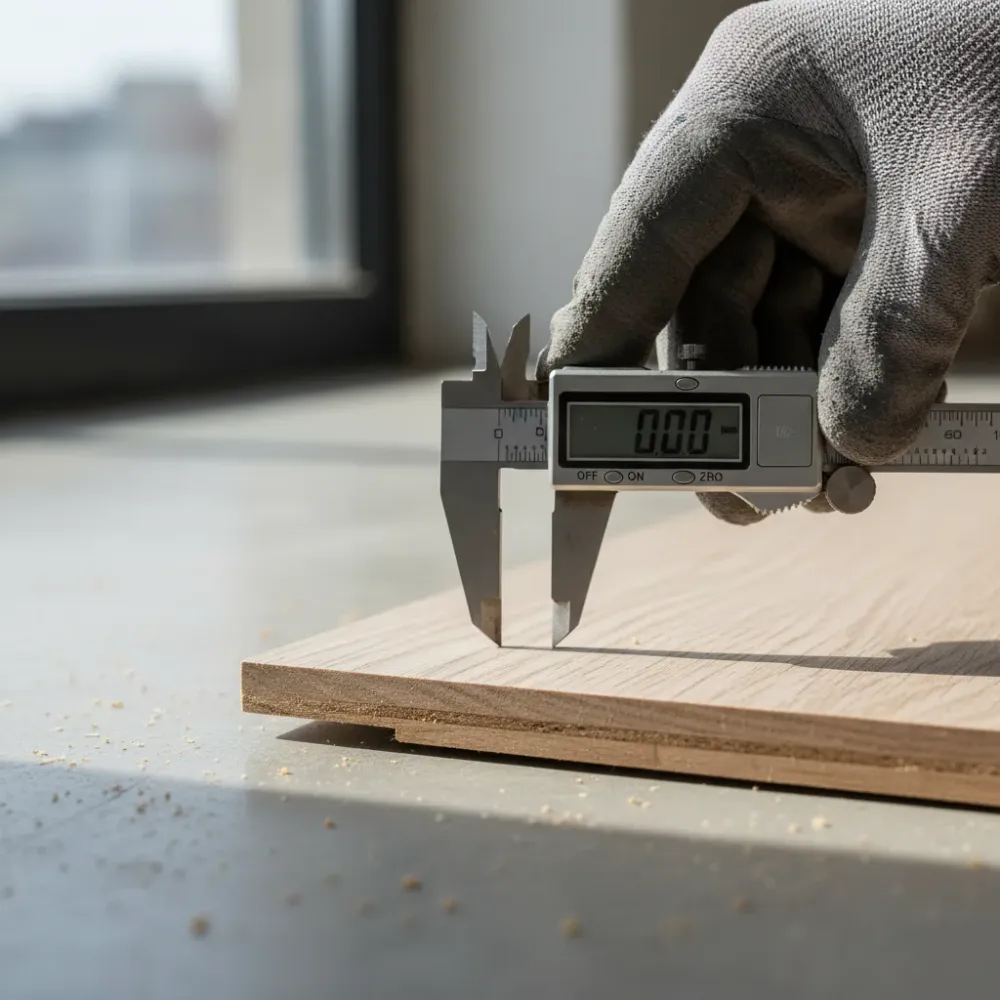
Engineered boards have a thin wear layer of real hardwood on top. Underneath that sits plywood or HDF in cross-layered sheets. That top layer is usually between 2mm and 6mm thick. Some cheaper boards have even less. So when you sand an engineered floor, you're working with a much smaller margin for error. Go too deep and you'll cut right through to the substrate. That's not a fix. That's a replacement.
We see this every week. Someone's hired a mate with a drum sander and now there are pale patches where the veneer has been burned through. Especially on those entry-level engineered boards you find in a lot of newer Auckland apartments around Wynyard Quarter and the Viaduct. The wear layer on those can be as thin as 1.5mm.
Here's what changes when you're sanding engineered timber instead of solid:
- You need finer grits and lighter pressure to avoid cutting through the veneer
- Drum sanders are risky on thinner boards, so we often use orbital or belt machines instead
- Edge work around skirting boards needs extra care because the veneer is thinnest at the tongue and groove joins
- Floating floors move differently under the machine than nailed-down solid timber
The finish matters too. Solid timber can handle heavy polyurethane buildup. But engineered boards respond better to thinner coats, especially water-based polyurethane or hardwax oil. The wood moves less, which is good. The bond between finish and veneer has to be right or it'll peel.
Not sure if your floors are engineered or solid? That's pretty common. Most people in Auckland can't tell just by looking. We can check the board profile at a doorway or vent before any work starts. It takes thirty seconds and it changes the whole approach.
The skill isn't just in the sanding. It's knowing when to stop.
How Professionals Assess Whether Your Floor Is Ready to Sand
Not every engineered timber floor can be sanded. That's the first thing we check.
Engineered boards have a real timber veneer on top, but it's only so thick. Some are 4mm. Some are barely 2mm. And if a floor's already been sanded once or twice, there might not be enough left to work with safely. We measure the wear layer before anything else. If it's too thin, sanding could cut right through to the plywood core. That ruins the board completely.
Here's what we look at during an on-site assessment:
- Veneer thickness remaining, measured with a gauge at board edges or transitions
- Condition of the existing finish, whether it's peeling, worn through, or just dull
- Signs of moisture damage, cupping, or delamination between layers
- How the boards were installed, floating, glued down, or a mix of both
Installation method matters more than most people realise. A floating floor moves slightly underfoot. That changes how we approach sanding pressure and equipment. Glued-down boards sit firmer, so they handle the process differently. We see a lot of floating engineered floors across Auckland, especially in newer builds around Hobsonville and out west. They can be sanded. But we won't start until we've confirmed it.
Understanding how engineered timber is constructed helps explain why these checks matter so much. The timber flooring construction guide from New Zealand's Building Performance unit outlines how cross-layered engineered boards behave differently from solid timber under stress and moisture — which directly affects how they respond to sanding.
What Homeowners Often Miss
You might look at your floor and think it just needs a quick buff. But underneath that cloudy finish, there could be deeper wear or even small areas where the veneer is already gone. We've pulled back rugs in living rooms and found patches worn right down to the substrate. That changes the whole plan.
Moisture is the other big one. Auckland's humidity can cause engineered boards to cup or swell, particularly in ground-floor rooms or near sliding doors. If the boards aren't stable, sanding won't fix the problem. It will make it worse. We always check subfloor moisture levels before we commit to any work.
A proper assessment takes about 20 minutes. It saves you from paying for a job that shouldn't happen yet.
The Step-by-Step Sanding Process for Engineered Timber Floors
People ask us all the time how we actually do this work. Fair enough. Your floor's got a thin wear layer, so you want to know we're not going to sand straight through it. Here's how we handle engineered timber floor sanding on every job across Auckland.
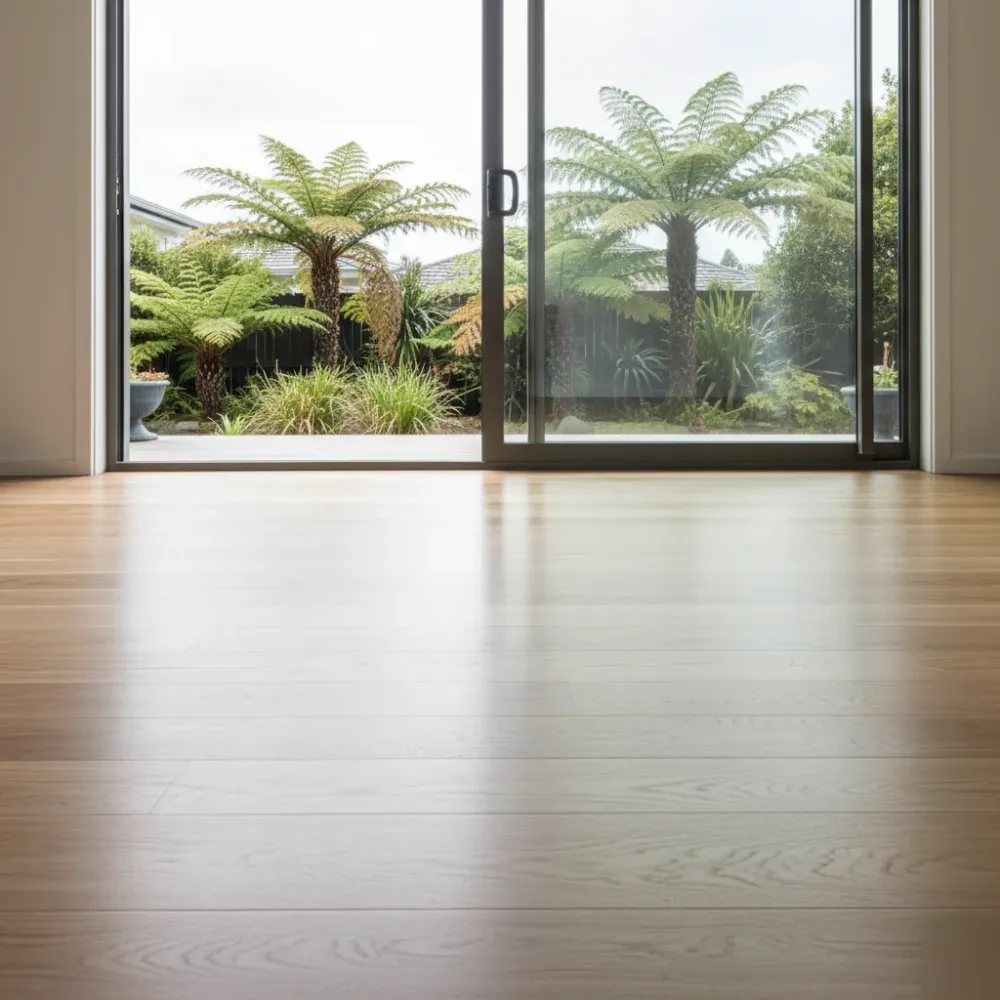
- Moisture and thickness check. We start with a moisture meter and a thickness gauge. The wear layer on engineered boards can be anywhere from 2mm to 6mm. We need to know exactly what we're working with before any machine touches the floor.
- Room prep. Furniture goes out. We tape off doorways and cover anything that can't move. Dust containment matters. We run extraction systems hooked up to every sander.
- Coarse cut with a drum sander. This first pass removes the old finish and any surface damage. On engineered boards we use a lighter grit than we would on solid timber. Typically 60 or 80 grit. Aggressive enough to strip the coating, gentle enough to protect what's underneath.
- Edge sanding. The drum can't reach walls or corners. We go around the perimeter with an edging sander, matching the same grit so everything blends.
- Progressive gritting. We step through finer grits. Usually 100, then 120. Each pass takes out the scratch marks from the one before. By the end the timber feels like glass under your hand.
- Detail work. Tight spots around door frames, stair nosings, built-in cabinetry. We get into these by hand or with smaller orbital machines. Plenty of homes in Ponsonby have original built-ins that need careful work around them.
- Final vacuum and tack. Every speck of dust affects the finish. We vacuum the entire floor, then wipe it down with a tack cloth. This step gets skipped by amateurs. It shows in the result every time.
The whole process usually takes a day for an average-sized Auckland living area. Bigger spaces or floors with heavy wear might need two.
And here's something we see constantly. Homeowners try a quick sand with a hired orbital and end up with uneven patches and swirl marks. Engineered timber floor sanding isn't forgiving. One wrong pass and you're into the plywood core. That's why we check the wear layer thickness at multiple points across the room, not just one corner.
Want to know what comes next after sanding? Ring us and we'll walk you through the finish options for your specific boards.
Need help with engineered timber floor sanding?
Request a free quote. Floor Sanding Auckland Experts is ready to help.
Finish Options That Suit Auckland's Humid Climate
Auckland's moisture levels change everything about how we finish an engineered timber floor. Pick the wrong product and you'll see clouding, peeling, or a sticky surface that never quite cures. We've learned this the hard way over years of working across the city.
The two main categories are water-based polyurethane and hardwax oil. Both work well on engineered timber, but they behave differently in our climate.
Water-Based Polyurethane
This is what most Auckland homeowners end up choosing. It dries fast, holds up well in high-traffic areas, and doesn't yellow over time. That last point matters if you've got a lighter timber species like oak or ash. We apply multiple coats with light sanding between each one. The final result is a clean, hard-wearing surface that handles humidity without drama.
Homes closer to the coast, like in Mission Bay or St Heliers, tend to cop more moisture. Water-based poly handles that well because it forms a sealed film over the veneer. Nothing gets in.
Hardwax Oil
If you want a more natural look and feel, hardwax oil is the way to go. It soaks into the timber rather than sitting on top. You get a matte, tactile finish that shows off the grain beautifully. But it does need a bit more upkeep. We recommend a maintenance coat every couple of years depending on foot traffic.
People who choose hardwax oil love the way it feels underfoot. It's a different experience entirely.
Here's what we consider when recommending a finish for your engineered timber floor sanding project:
- How much foot traffic the room gets daily
- Whether pets or young kids are in the house
- The timber species and its natural colour
- Proximity to moisture sources like kitchens or bathrooms
- Your preference for sheen level, from satin to matte
And sometimes it's a combination. We've done plenty of Auckland homes where the living areas get polyurethane and the bedrooms get oiled. There's no rule that says the whole house has to match. What matters is that each room gets a finish that actually works for how you use it.
Not sure which direction to go? Get in touch and we'll talk it through.
How Many Times Engineered Timber Floors Can Be Sanded
This is the question we get more than any other. The answer depends on one thing: how thick your wear layer is.
Engineered timber isn't solid wood all the way through. It's a real timber veneer bonded to a plywood or HDF core. That top layer is what we sand. Once it's gone, it's gone. So knowing your wear layer thickness matters more than anything else when you're planning engineered timber floor sanding.
Wear Layer Thickness and What It Means for You
Most engineered boards sold in Auckland fall into a few common ranges:
- 2mm wear layer: Can handle one light sand, maybe two if the floor's in decent shape. We see a lot of these in newer apartments around Hobsonville Point.
- 3-4mm wear layer: Good for two to three full sanding cycles over the floor's life. This is the most common thickness we work with.
- 6mm wear layer: These can take three or four sandings easily. They behave almost like a solid timber floor under the machine.
We always measure before we start. A small gauge tells us exactly how much material we've got to work with. It takes about thirty seconds per board. Most people don't actually know what thickness they've got installed. That's normal.
Why Previous Sanding History Matters
If your floor's already been sanded once or twice before, we need to account for that. Each pass removes roughly 0.5mm of timber. A floor that started with a 4mm wear layer and has been sanded twice might only have 3mm left. Still workable. But it changes how aggressive we can be with the grit sequence.
Some older Auckland homes had engineered floors put in during the early 2000s. Those boards have often been sanded at least once already. We check every time.
And here's something worth knowing. Even if your floor can only handle one more sand, that single refinish can buy you another ten to fifteen years. So it's not wasted effort. But you do want a crew that understands the limits and won't burn through your wear layer chasing a deep scratch.
Not sure what you're working with? Call us and we'll measure it on-site before anything happens.
Frequently Asked Questions
Common questions about engineered timber floor sanding services
Can engineered timber floors in Auckland apartments actually be sanded?
Yes, most engineered timber floors can be sanded — but only if enough wear layer remains. This is a real concern in newer Auckland apartments, especially around Wynyard Quarter and the Viaduct, where entry-level boards sometimes have a wear layer as thin as 1.5mm. We measure the veneer thickness before any machine touches your floor. If there's enough left to work with safely, we proceed. If not, we'll tell you honestly rather than risk cutting through to the substrate.
How do I know if my floor has already been sanded too many times?
The clearest sign is pale or discoloured patches where the veneer has worn through to the plywood core. You might also notice the finish peeling in areas rather than just looking dull. We check veneer thickness with a gauge at board edges and transitions during every assessment. A floor that's been sanded once or twice may still have enough left. One that's been over-sanded usually can't be saved without replacement.
Does Auckland's humidity affect engineered timber floors before sanding?
It absolutely does. Auckland's humidity can cause engineered boards to cup or swell, particularly in ground-floor rooms or near sliding doors. If your boards aren't sitting flat and stable, sanding won't fix the problem — it will make it worse. We always check subfloor moisture levels before committing to any work. Floating floors common in newer builds out west around Hobsonville are especially worth checking, as they respond differently to moisture than glued-down boards.
What's the difference between a floating floor and a glued-down floor when it comes to sanding?
A floating floor moves slightly underfoot, which changes how we manage sanding pressure and equipment. Glued-down boards sit firmer and handle the process differently. Both can be sanded successfully, but the approach isn't the same. We confirm the installation method during our on-site assessment before any work starts. Getting this wrong is one of the most common reasons DIY sanding jobs go badly on engineered timber.
How long does the sanding process take from start to finish?
For most Auckland homes, the sanding itself takes one to two days depending on floor size and condition. The finish coats then need drying time between each application. Water-based polyurethane dries faster than oil-based options, which is useful if you need the room back quickly. You'll typically be walking on the floor lightly within 24 hours of the final coat, but full hardness takes longer. We'll give you a clear timeline specific to your job before we start.
What should I do to prepare before the team arrives?
Clear all furniture from the room before we get there. Take down any rugs and check under them — we've found patches worn right through to the substrate hiding under living room rugs more than once. If you have built-in cabinetry or original features like those common in Ponsonby villas, let us know in advance so we can plan the detail work. The more access we have from the start, the smoother the job goes for everyone.
Ready to Get Started?
Request a free quote. Call 09 888 0793 today.
