Deck Sanding and Oiling
Deck Sanding, Staining and Oiling Across Auckland
Deck Sanding and Oiling in Auckland: Restore Your Timber the Right Way
Deck Sanding and Oiling
☎ Call 09 888 0793 📅 Request a free quote ⭐ Trusted Flooring Professionals ⚡ No Hidden Cost, On Time & On budget 🛡 Over 30 Years Of Experience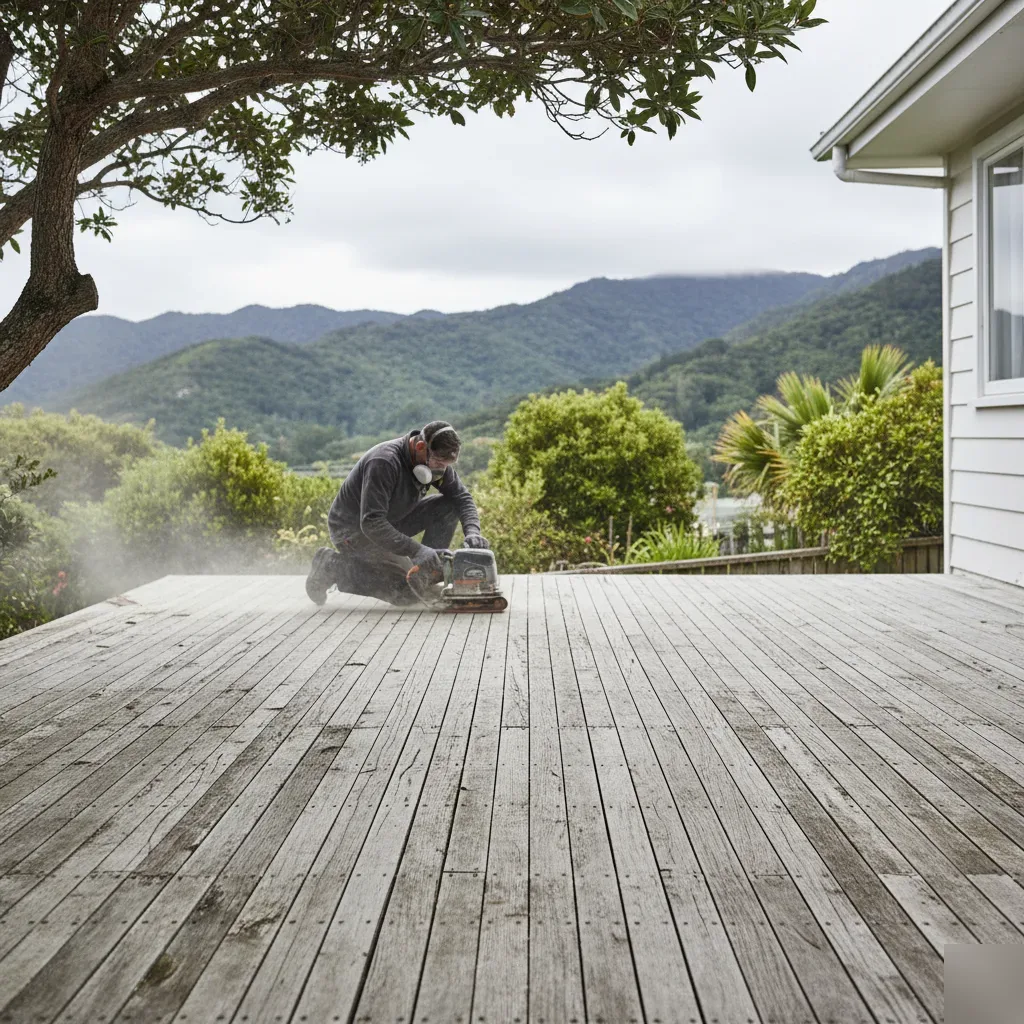
What’s Covered on This Page
- How to Tell When Your Deck Needs More Than a Re-Oil
- Why Sanding Before Oiling Is Non-Negotiable
- The Deck Sanding and Oiling Process, Step by Step
- Timber Types Found on Auckland Decks and How Each One Is Treated
- Why Auckland’s Climate Makes Timing Your Deck Oil Critical
- How long does deck sanding and oiling take in Auckland?
- Can I just re-oil my deck without sanding it first?
- How does Auckland’s climate affect how often a deck needs sanding and oiling?
- Does the type of timber on my deck change how it gets sanded?
- What should I do to get my deck ready before you arrive?
- How do I know if my deck just needs oiling or a full sand-back?
Need deck sanding and oiling?
Call now for a free estimate
How to Tell When Your Deck Needs More Than a Re-Oil
Most people call us thinking they just need another coat of oil, but the deck’s already past that point.
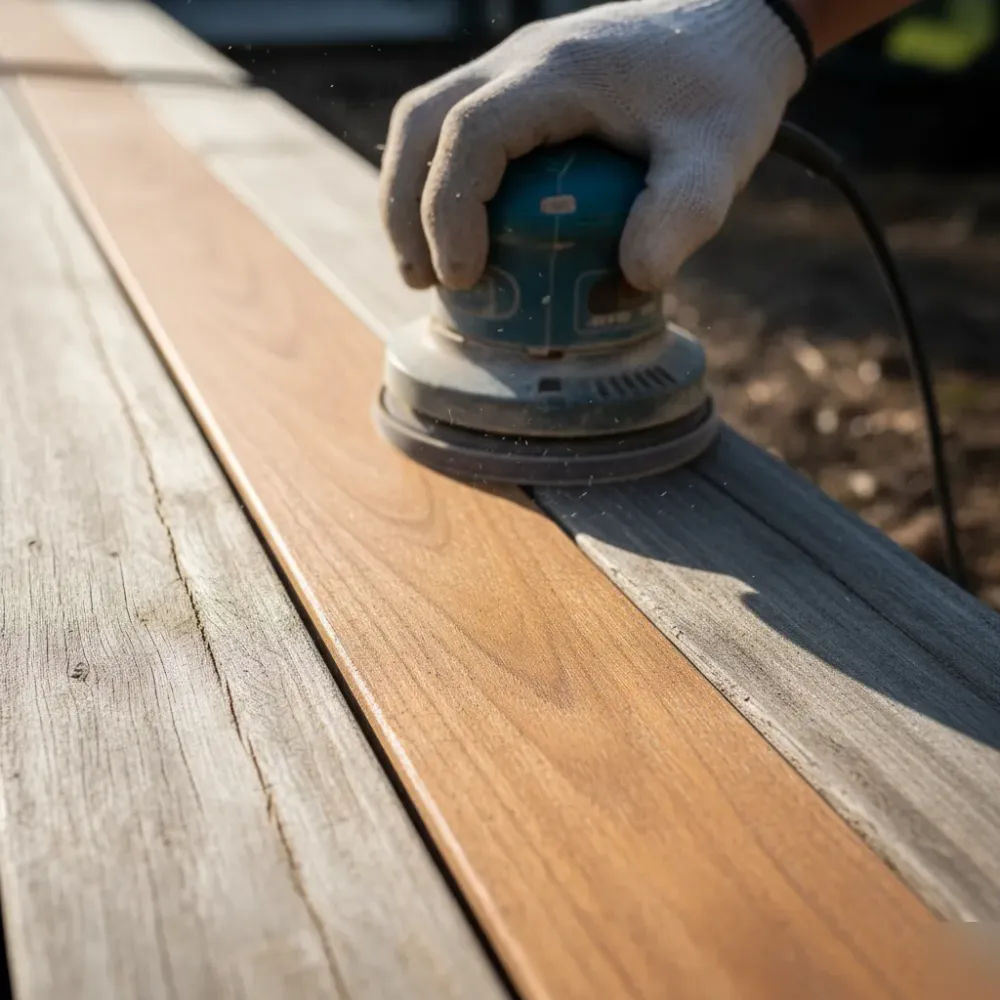
Here’s the thing. A re-oil works when your existing finish is still intact but fading. You can feel the timber’s still smooth underfoot. The grain looks clean. It just needs a feed. But once you’re seeing grey patches, splintering edges, or water soaking straight into the boards instead of beading on top, that’s your deck telling you the old finish has broken down completely. A fresh coat of oil over damaged timber won’t fix anything. It’ll just sit on top of the problem.
Signs You Need Full Deck Sanding and Oiling
We walk dozens of Auckland decks every month. These are the things we check:
- Grey or silver discolouration that doesn’t come off with a scrub
- Raised grain or rough patches catching bare feet
- Timber fibres lifting and starting to splinter
- Black spots from mould that’s worked into the wood
- Oil or stain peeling in sheets rather than wearing evenly
If you spot two or more of those, you’re looking at a proper sand-back before any oil goes on. And that’s not a bad thing. It means we strip the deck right back to fresh timber, remove all the damage, and give the oil a clean surface to bond with. The result lasts years longer than slapping product over worn boards.
Auckland’s weather does a number on exposed timber. Over in Pt Chevalier and along the Waitematā Harbour side, we see salt air speed up the breakdown. Decks facing north cop the worst UV. So a deck that looked fine last summer can turn rough by autumn.
Not sure what your deck actually needs? That’s pretty common. Run your hand across the boards. If it feels furry or catches on your skin, sanding comes first. If it’s still smooth but looks dry, a re-oil might do the job. We can tell you in about two minutes on site. Give us a call and we’ll have a look.
Why Sanding Before Oiling Is Non-Negotiable
Skip the sanding and you’ve wasted your oil. Simple as that.
We get calls from Auckland homeowners who’ve tried oiling their deck without sanding first. Every time, the result is patchy, sticky, and peeling within months. Oil can’t bond to a surface that’s clogged with old finish, dirt, and UV-damaged timber fibres. It just sits on top. Then it breaks down fast, and you’re back to square one with a deck that looks worse than before.
Sanding strips away the grey, weathered layer and opens up fresh timber grain underneath. That’s what the oil needs to grab onto. When we sand a deck in Ponsonby or out in Titirangi, we’re not just making it look clean. We’re creating thousands of tiny pores in the wood that pull the oil deep into the fibres. That penetration is what gives you real protection against Auckland’s rain, humidity, and harsh summer UV.
Here’s what proper sanding actually does for your deck:
- Removes old flaking oil, grey oxidation, and ground-in grime
- Levels out raised grain and minor surface damage from foot traffic
- Opens the timber pores so oil absorbs evenly across every board
- Gives you a smooth, splinter-free surface that’s safe underfoot
We see decks where someone’s applied three coats of oil over unsanded timber. The buildup goes tacky in the shade and peels in the sun. The fix? Sand it all back and start fresh.
Different timbers need different grit sequences too. A Kwila deck in Auckland takes a more aggressive first pass than pine because it’s so dense. Pine is softer, so we step through finer grits carefully to avoid sanding too deep. Get the grit wrong and you’ll either leave scratches that show through the oil or close the grain too tight for proper absorption.
But here’s the thing most people don’t realise. Sanding is where 80% of the final result comes from. The oiling part is almost easy once the prep is right. We’ve been doing deck sanding and oiling long enough to know that rushing the sand is the single biggest mistake you can make.
The Deck Sanding and Oiling Process, Step by Step
People always ask what actually happens on the day. Fair enough. Here’s how we run a deck sanding and oiling job from start to finish.
- Clear and inspect. We move your furniture, planters, and anything else off the deck. Then we check every board. Popped nails get punched down. Loose screws get tightened. Any damaged timber gets flagged so we can talk about floorboard replacement and repairs before we sand a thing.
- Coarse sand. We start with a heavy grit to strip the old finish, grey weathering, and surface damage. This is where the real transformation begins. Kwila decks in Auckland cop a beating from UV and rain, so this first pass does the heavy lifting.
- Fine sand. We step through progressively finer grits. This smooths out scratches from the coarse pass and opens the timber grain so it can absorb oil properly. Rush this step, you get a patchy finish. We don’t rush it.
- Clean and prep. All dust gets vacuumed and wiped. We pay close attention to gaps between boards where grit hides. A clean surface is everything. The oil bonds to bare timber, not leftover debris.
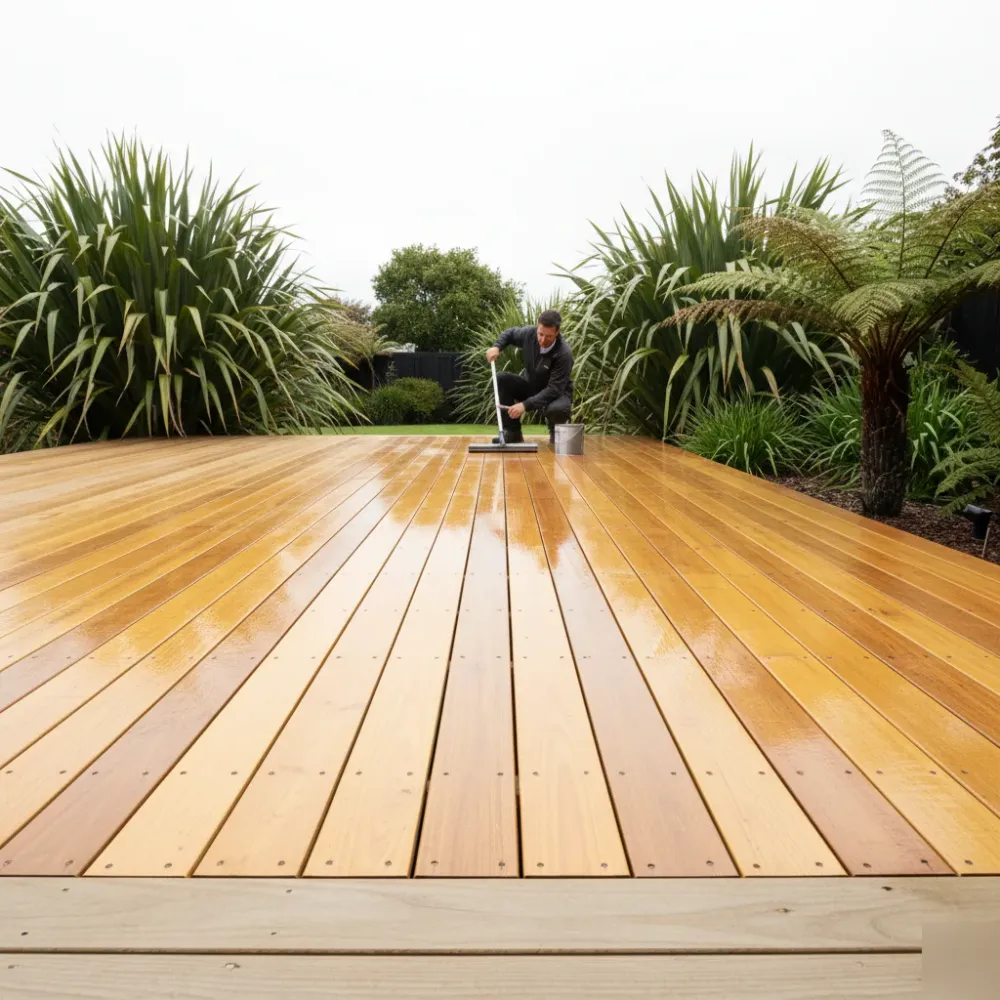
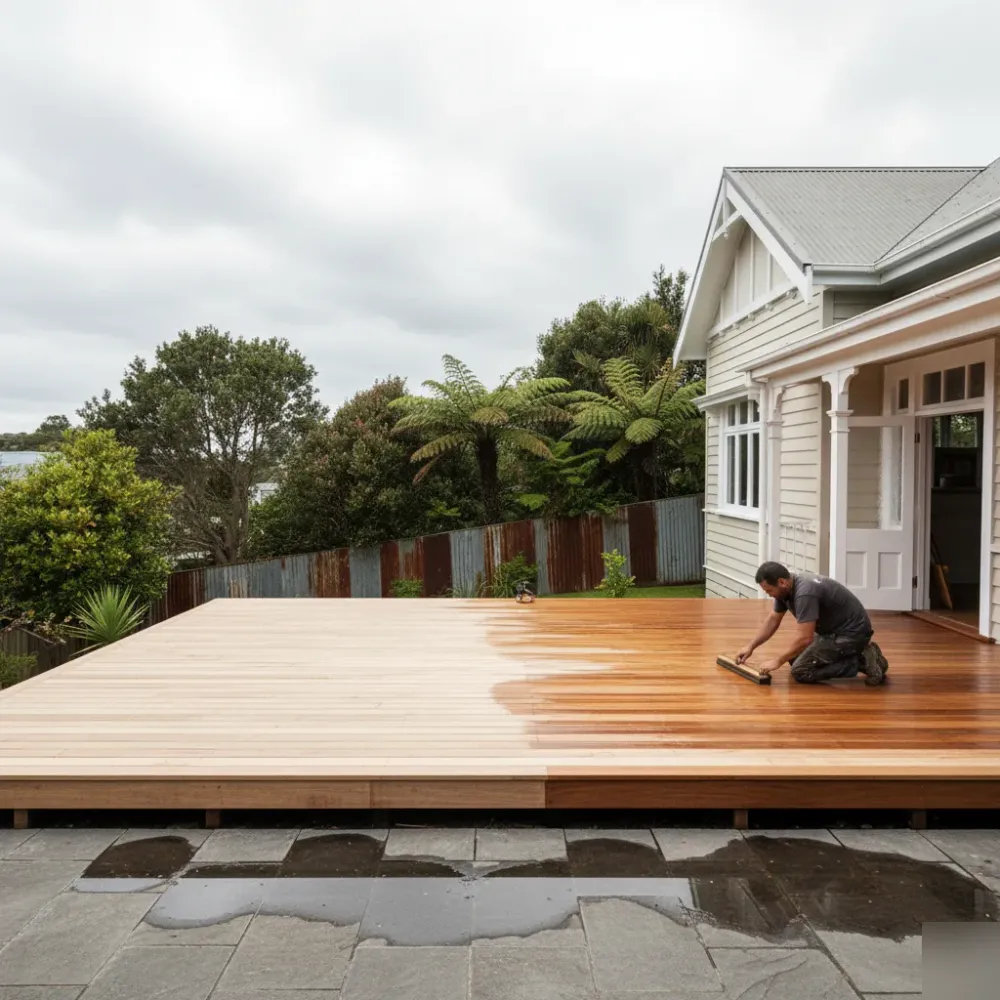
- Oil application. We apply your chosen oil with brushes or rollers depending on the board profile. Most Auckland decks need two coats minimum. We let the first coat soak in fully before the second goes on. Timber in Ponsonby villas with older Kwila decks can be thirsty and sometimes takes a third.
- Final check and dry. We inspect every section under natural light. Any thin spots or missed edges get touched up on the spot. Then we let it cure and talk you through when it’s safe to walk on and move furniture back.
The whole deck sanding and oiling process usually takes one to two days depending on size and condition. Bigger decks or decks with heavy mould might need a bit longer.
And here’s something most customers don’t realise. The prep work before sanding matters just as much as the sanding itself. Skipping the nail check or the board inspection leads to torn sandpaper, uneven surfaces, and wasted time. We’ve seen crews skip it before on jobs we’ve been called back to fix.
Need help with deck sanding and oiling?
Call now for a free estimate. Floor Sanding Auckland Experts is ready to help.
Timber Types Found on Auckland Decks and How Each One Is Treated
Not all timber sands the same. And not all oil soaks in the same way either. The species of wood on your deck changes everything about how we approach the job.
Kwila is the most common deck timber we see across Auckland. It’s dense, oily, and naturally durable. But that density means it doesn’t absorb oil easily. We sand kwila with a coarser grit first to open the grain, then work through finer grades before applying oil. Skip that first step and the finish just sits on top. It peels within months. We see this every week on decks where someone’s tried a quick DIY coat over weathered kwila.
Pine and Treated Pine
H3.2 and H4 treated pine is everywhere in Auckland. From Remuera villas to newer builds out in Flat Bush, it’s the go-to framing and decking timber. Pine is softer than kwila, so it sands faster. That sounds like good news, but it also means you can gouge it quickly with the wrong grit or too much pressure. We use a lighter touch and finer progression. Pine soaks up oil fast, so we apply thinner coats and let each one cure properly before the next.
Then there’s vitex. Gorgeous grain. Hard as nails.
Vitex behaves a lot like kwila during sanding. It needs patience and sharp abrasives. The oil finish on vitex can look stunning when it’s done right, a deep warm tone that lasts well through Auckland’s wet winters. But rush the prep and you’ll get blotchy patches where the oil hasn’t penetrated evenly.
We also work on cedar decks from time to time. Cedar is soft and can splinter if you push too hard with the sander. It needs a gentle approach and an oil that won’t darken the natural colour too much.
Here’s what matters regardless of timber type:
- Moisture content needs to be below 18% before any oil goes on
- Old coatings or grey weathered fibres must be fully removed first
- Each species needs a different sanding grit sequence
- Oil type and number of coats vary by how porous the timber is
When a deck oil fails early, it’s because the timber type wasn’t considered during prep. We match every step to the wood that’s actually under our feet. That’s the difference between a finish that lasts one summer and one that holds up for years across Auckland’s unpredictable weather.
Why Auckland’s Climate Makes Timing Your Deck Oil Critical
Auckland gets over 1,200mm of rain a year. That moisture doesn’t just sit on your deck and dry off. It soaks into exposed timber grain, swells the fibres, and starts breaking things down from the inside out.
And here’s what most people don’t realise. It’s not just the rain that causes problems. Auckland’s humidity stays high for months at a time, especially through autumn and into winter. Your deck never fully dries out during those stretches. Oil applied to damp timber won’t absorb properly. It just sits on top and peels away within weeks. We see this every week on decks across the city.
When to Book Your Deck Sanding and Oiling
The best window for deck sanding and oiling in Auckland falls between late October and early April. You want at least two to three dry days in a row before the oil goes on. The timber needs to be bone dry, not just surface dry. We check moisture levels before we start any oiling work. If the reading’s too high, we’ll tell you straight.
That said, timing isn’t just about weather. It’s about your deck’s condition right now. If you’re noticing these signs, don’t wait for the “perfect” month:
- Grey, faded boards that have lost their colour
- Timber that feels rough or splintery underfoot
- Water soaking straight into the wood instead of beading up
- Mould or green algae creeping across shaded areas
Homes around Devonport and the North Shore cop a lot of coastal moisture. Decks in those areas tend to deteriorate faster than ones further inland. But nowhere in Auckland is immune. The UV here is brutal too. According to NIWA, New Zealand’s UV levels run about 40% higher than similar latitudes in the Northern Hemisphere. That sun bleaches unprotected timber fast.
So if your deck looks tired heading into spring, that’s your cue. Get it sanded and oiled before summer hits and you’ll actually enjoy using it. Wait too long and you’re chasing damage instead of preventing it.
Frequently Asked Questions
Common questions about deck sanding and oiling services
How long does deck sanding and oiling take in Auckland?
Most Auckland decks take one to two days from start to finish. A smaller deck in good condition can be done in a day. Larger decks, or ones with heavy mould or deep weathering, may need an extra day. After oiling, you’ll need to stay off the deck for at least 24 hours while it cures. We’ll let you know the exact timeline once we’ve had a look at your boards.
Can I just re-oil my deck without sanding it first?
You can re-oil without sanding only if the existing finish is still intact and the timber feels smooth underfoot. If you’re seeing grey patches, splintering, or water soaking straight into the boards, sanding comes first. Oiling over damaged or clogged timber means the oil can’t bond properly. It sits on top, goes patchy, and peels within months. Sanding opens the grain so the oil actually penetrates and protects.
How does Auckland’s climate affect how often a deck needs sanding and oiling?
Auckland’s humidity, heavy rain, and strong UV all break down timber finishes faster than many people expect. Decks facing north cop the worst UV damage. Near the Waitematā Harbour and coastal suburbs like Pt Chevalier, salt air speeds up the breakdown even more. A deck that looked fine last summer can turn rough and grey by autumn. Most Auckland decks benefit from a re-oil every one to two years, with a full sand-back every few years.
Does the type of timber on my deck change how it gets sanded?
Yes, different timbers need a different approach. Kwila, which is common on older Auckland decks, is very dense and needs a more aggressive first sanding pass. Pine is softer, so we work through finer grits carefully to avoid sanding too deep or closing the grain. Getting the grit sequence wrong leaves scratches that show through the oil or stops the oil from absorbing evenly. Knowing your timber type makes a real difference to the final result.
What should I do to get my deck ready before you arrive?
Clear everything off the deck before we get there. Move furniture, pot plants, outdoor rugs, and any kids’ toys. The deck needs to be completely empty so we can sand right to the edges and check every board. If there’s anything fixed down that you’re not sure about, just let us know beforehand. We handle the rest from there, including punching down any popped nails and tightening loose screws before sanding starts.
How do I know if my deck just needs oiling or a full sand-back?
Run your hand across the boards. If the surface feels furry, rough, or catches on your skin, sanding comes first. If it still feels smooth but looks dry or faded, a re-oil might be enough. Other signs you need a full sand-back include grey or silver discolouration that won’t scrub off, black mould spots worked into the wood, or oil peeling in sheets. Spot two or more of those and you’re past the re-oil stage.
Ready to Get Started?
Call now for a free estimate. Call 09 888 0793 today.
☎ Call 09 888 0793 📅 Request a free quote